
In this lesson, you will learn how to use the VEX AIR Drone Controller to capture images from the VEX AIR Drone during flight. You will also learn how to view your images on the controller and transfer them to a computer, so you can use them as visual feedback to improve your piloting skills.
Watch the video below to learn about:
- Capturing an image during flight using the controller.
- Viewing your images on the controller.
- Accessing captured images from the controller on your computer.
Mission: Sky Snapshots
In this mission, you will fly over marked locations and capture images during flight. You will view the images on your controller, and access them with your computer so you can add them to your Mission Log.
Follow these steps to complete your mission:
- Mark two locations on the ground diagonally to the left and right in front of the drone's takeoff zone, in the center of the field. Each should be 6 ft (1.83 m) apart from the drone.
- Use the image below for reference as you set up your flight area.
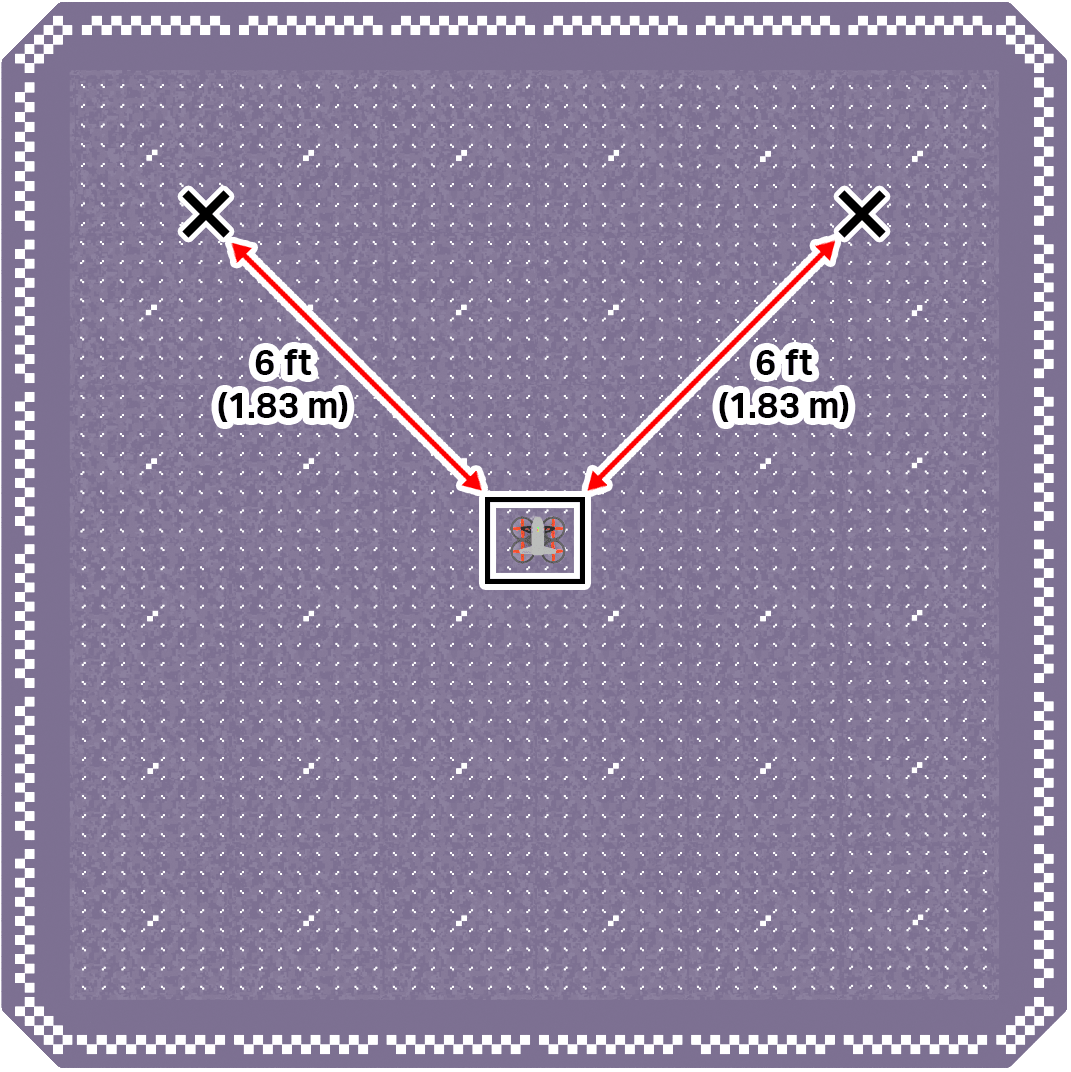
- Use the image below for reference as you set up your flight area.
- Ensure all flight team members are clear on their roles, then use the pre-flight checklist in the Mission Log (Google Doc / .docx / .pdf) to ensure you, your indoor flight environment, and the drone itself are ready and safe for flight.
- Take off and fly until the drone is positioned over one of the marked locations, and use the controller to capture at least one image. Then, fly over the second marked location and capture additional image(s).
- Together with your flight team, view your image(s) on the controller.
- Access the image(s) on your computer and add image(s) to your Mission Log.
Real-World Connections
Drone photography allows pilots to capture images from angles and heights that are impossible to reach from the ground. Professionals use aerial photos in many industries, including construction, agriculture, environmental science, and real estate.
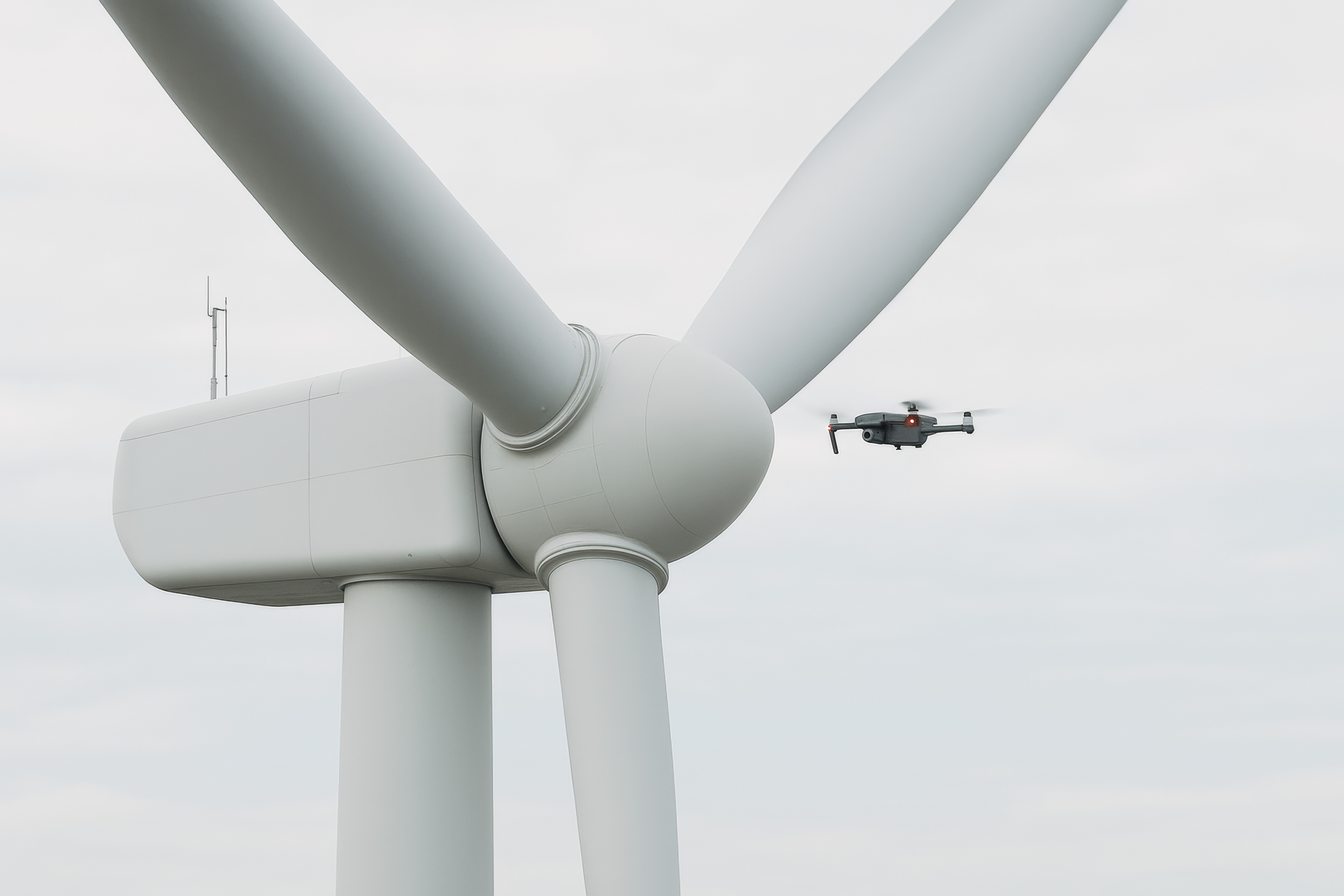
Engineers use commercial drones to collect detailed images and video of structures that are difficult, dangerous, or expensive to inspect by hand, like the image shown here. Bridges, cell towers, wind turbines, rooftops, and power lines can all be photographed from the air without requiring workers to climb or use heavy equipment. High-resolution images allow engineers to zoom in and look for cracks, corrosion, loose bolts, or other signs of damage.
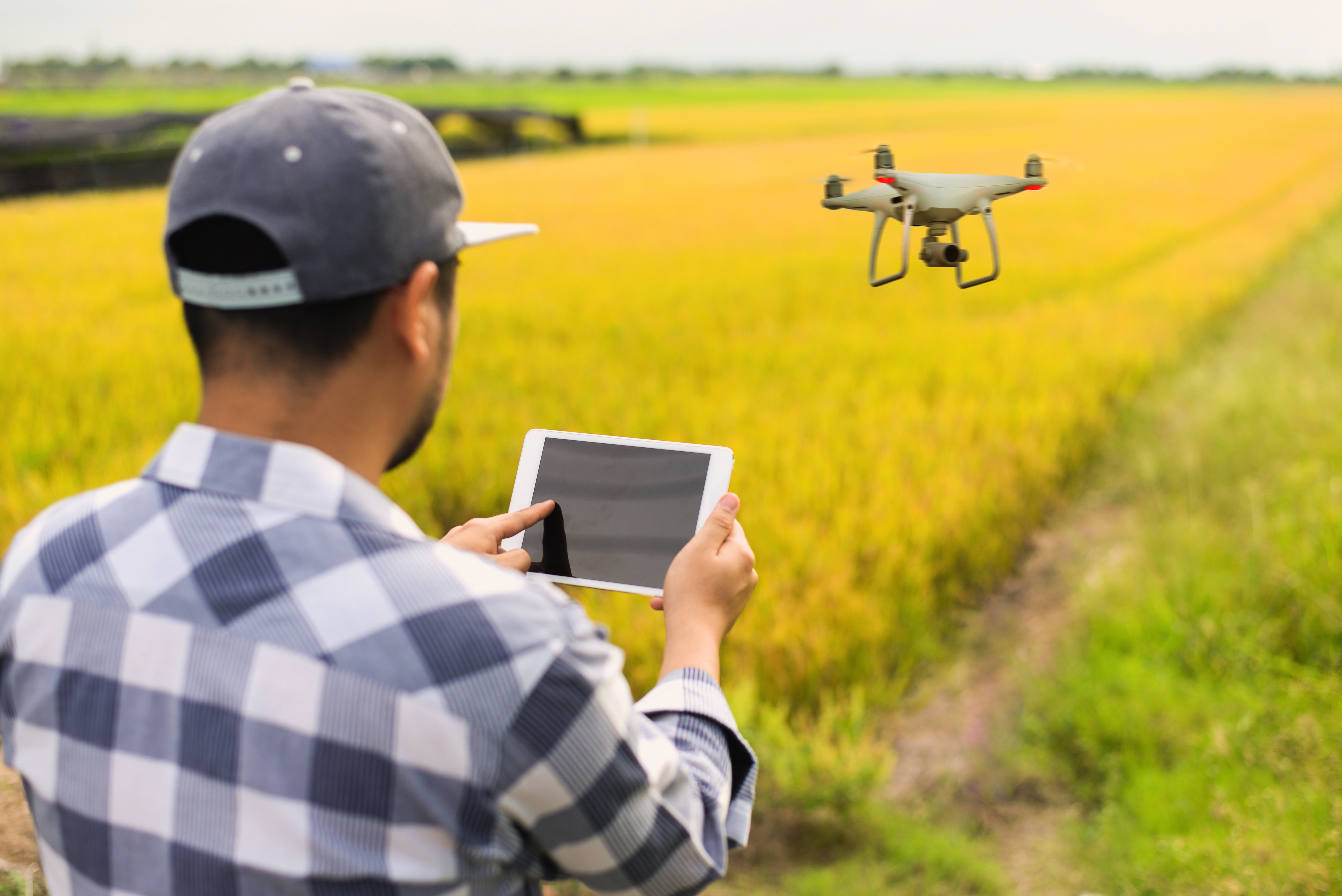
In agriculture, farmers can use commercial drones, like the one shown here, and their images to monitor large fields and identify areas that may need attention. From the air, it is easier to see patterns, dry spots, or areas where plants may be unhealthy. Some drones use special cameras to detect heat or light that people cannot see, helping farmers find problems early. This information allows farmers to water, treat, or harvest their crops more effectively.
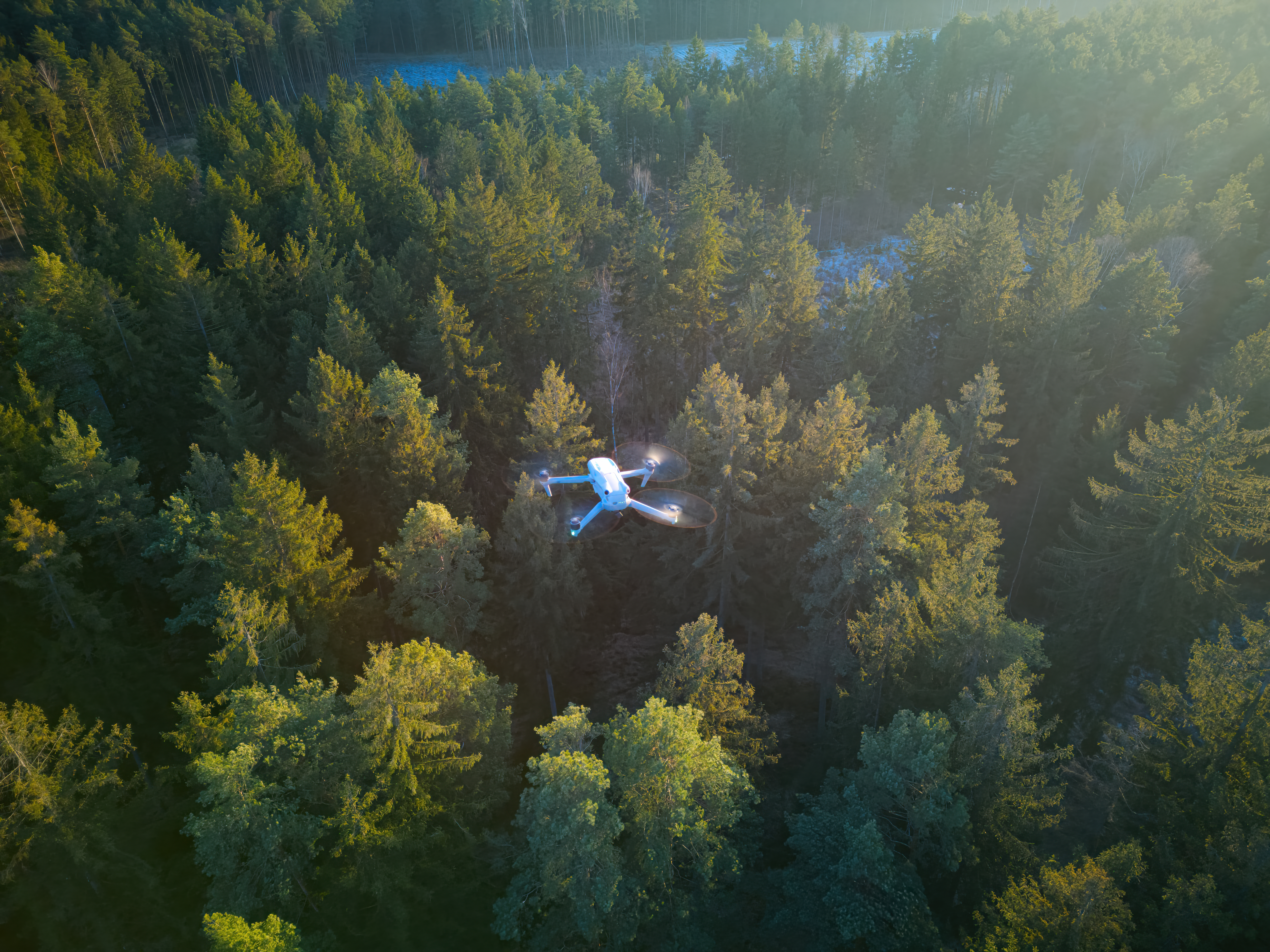
In environmental science, drones help researchers study forests, rivers, coastlines, and wildlife from above. Aerial images make it easier to track changes over time, such as erosion, pollution, or the effects of storms. Scientists also use drone photos to count animals, monitor habitats, and observe areas that may be difficult or unsafe to reach on foot. By capturing clear and accurate images, drone pilots help researchers better understand and protect the environment.
Environmental researchers use aerial drone images, as shown here, to observe forests and track changes in landscape over time.
Check Your Understanding
Before moving on, ensure that you understand the concepts in this lesson by answering the questions here (Google Doc / .docx / .pdf).
Select Next > to move to the next lesson.