
In the previous lesson, you were introduced to the module options for the VEX AIR Drone. You learned about how the drone needs to move in order to use each module successfully. In this lesson, you will focus on the Passive Module, and practice moving objects during flight.
Watch the video below to learn about:
- How to attach and detach the hook from the module.
- How the module interacts with its indoor environment.
- How to manipulate different types of objects using the module.
Mission: Passive Pick Up
In this mission, you will use the Passive Module to try to pick up and move an orbit ball and a piece of cargo. You will need to fly with precision, using smooth movements and careful alignment to successfully pick up and release each object.
Follow these steps to complete your mission:
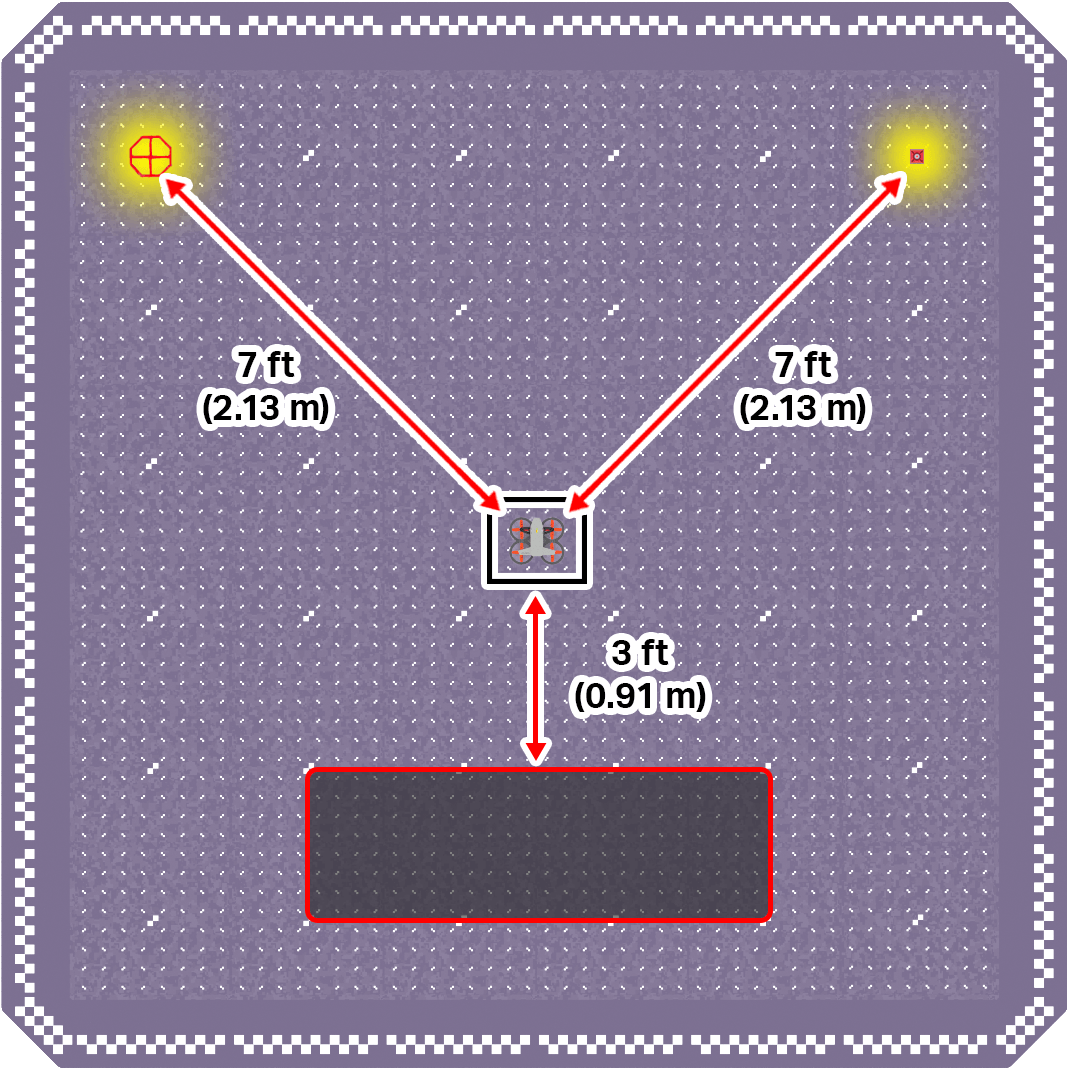
- Place the orbit ball in the upper left corner and a piece of cargo in the upper right corner of the field. Each one should be 7 ft (2.13 m) away from the takeoff zone in the center of the field in your indoor flight area.
- Mark a drop-off zone behind the takeoff zone to deliver the objects to. The drop-off zone is 3 ft (0.91 m) apart from the drone.
- Ensure all flight team members are clear on their roles, then use the pre-flight checklist in the Mission Log (Google Doc / .docx / .pdf) to ensure you, your indoor flight environment, and the drone itself are ready and safe for flight.
- Be sure the Passive Module is attached to the drone.
- See this article for pre-flight safety reminders and guidance on getting your drone ready for flight.
- Try to use the Passive Module to pick up the object and put it down in the drop off zone. Record each flight in the Mission Log.
- Repeat steps 1–3 for both types of objects.
Real-World Connections
In aviation and engineering, professionals do not always choose the most complex tool. Many drone systems are designed to be simple and lightweight on purpose. Fewer moving parts mean fewer failures, less maintenance, and lower power use.
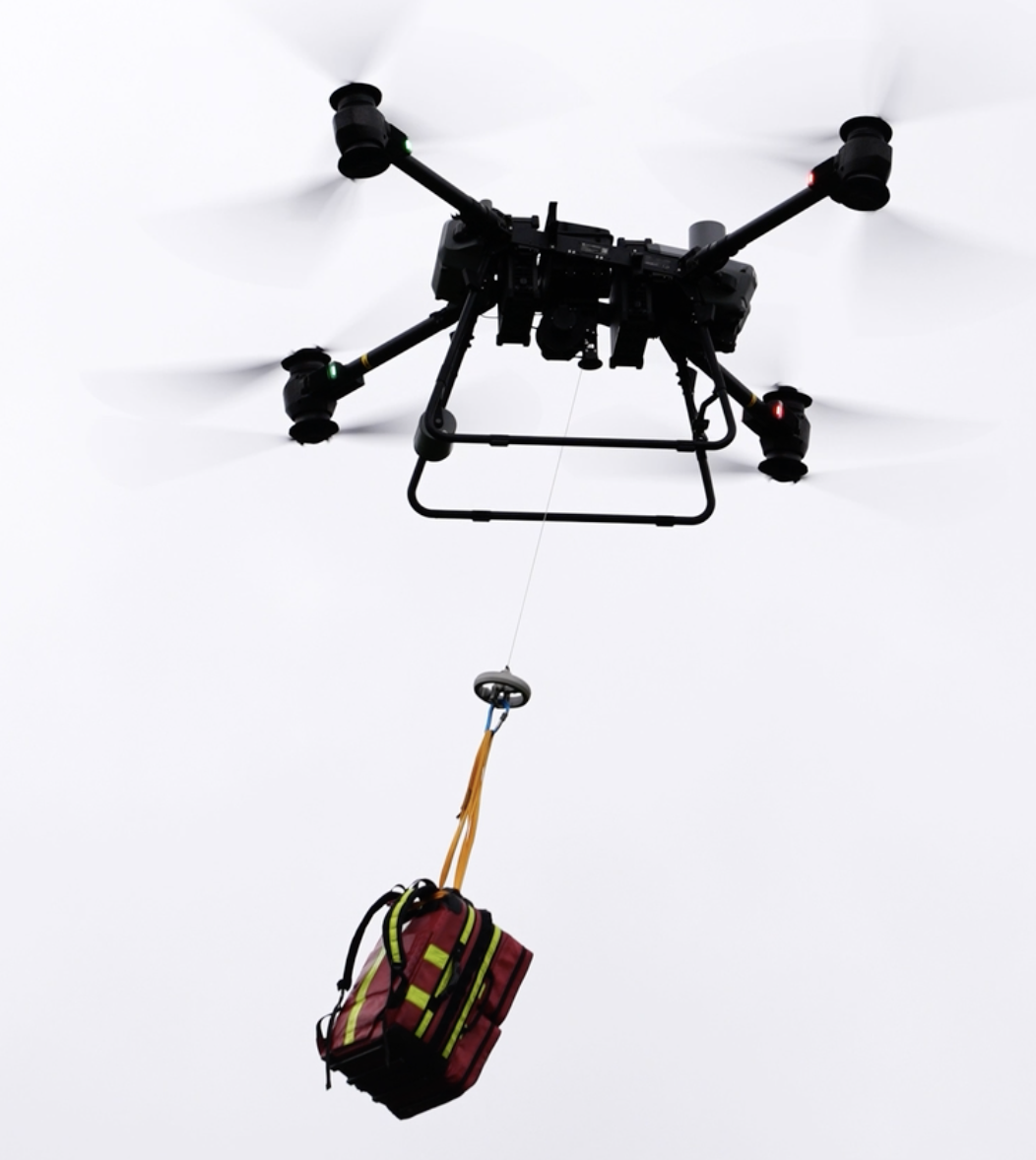
For example, some utility drones, like the one shown here, use simple hook systems to lower cables or tools to workers on power lines. Instead of a powered claw or gripper, the drone pilot carefully positions the aircraft so gravity holds the tool in place.
In other cases, drones delivering lightweight emergency supplies may use a basic drop hook rather than a motorized system to conserve battery life and extend flight time. Simple systems improve efficiency and reliability — but they require greater pilot precision.
Check Your Understanding
Before moving on, ensure that you understand the concepts in this lesson by answering the questions here (Google Doc / .docx / .pdf).
Select Return to Units > to move to the next unit in the course.