Before You Begin This Session
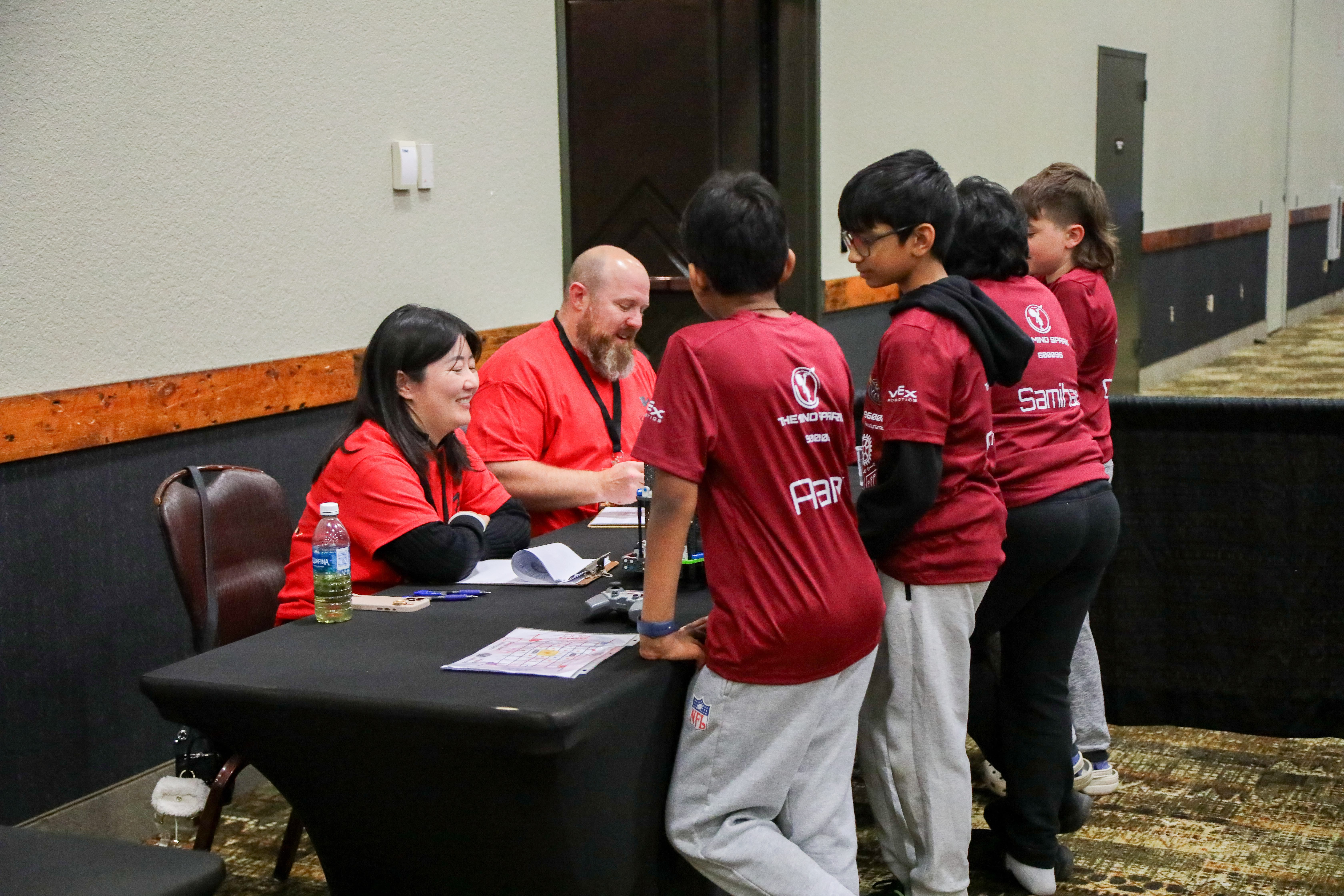
The goal of this session is to provide your team with a walk-through experience of a VEX IQ Robotics Competition event, so that they can feel prepared and comfortable with what to expect on competition day. This session is set up for students to practice doing things like going through inspection, packing and setting up a pit, following a match schedule, and other logistics they will be responsible for managing throughout the event. Your role is to guide students through this “dress rehearsal”. You know your students best, so you can tailor this experience to best meet their needs.
Before you begin this session, read over this page, and the Coach Notes, so you can prepare the walk-through effectively. Think about where you will hold your practice event and what elements you want to emphasize for your team.
If possible, you may want to invite other teams or adult volunteers to join you to help add a realistic element, and give students the opportunity to practice communication skills with others.
- Students can act as another team, to practice strategy discussion with an alliance partner.
- Adult volunteers can take on roles like judge, inspector, or referee, to practice interviews and your team advocating for themselves at a match.
- Families can join to cheer and mimic the sights and sounds of competition.
Prepare for Robot Inspection by reading this article and sharing the checklist with your students. If you or your students are unsure whether a part is allowed on a VEX IQ Competition robot, refer to the Legal Parts Appendix. This resource provides a current list of parts that are legal for competition and can be a helpful reference as students design and modify their robots.
Share this Letter Home (Google doc / .pdf / .docx) with your team's families so they know the expectations for the competition day. The Letter Home has template text for you to update with the specifics of your team's competition situation. Be sure to edit the letter before sharing it.
The VEX IQ Competition Day Guide from the Global Robotics and Science Foundation Library can also help you prepare your team for an event.
It's time to get ready for your first competition day! A VEX IQ Robotics Competition event involves more than just playing a match. In this session you will walk through some of the main parts of a competition, so you know what to expect. Every event is a little different, but there are things you can practice so you feel prepared when you arrive.
By the end of the session you will know what you need to do to be ready for competition day!
It's time to get ready for your first competition day! A VEX IQ Robotics Competition event involves more than just playing a match. In this session you will walk through some of the main parts of a competition, so you know what to expect. Every event is a little different, but there are things you can practice so you feel prepared when you arrive.
By the end of the session you will know what you need to do to be ready for competition day!
Remember, students are at the center of the competition. Your role during this practice session is to make sure that your team is prepared for what they will be faced with at the competition. You can coach and give reminders for things, but the team is ultimately responsible for their actions and interactions with referees, alliance partners, and judges.
Make sure that all members of the team know their Team Number. You may want to have name tags with the team number and your contact information on them, if you think that would benefit your students.
You may want to invite team adults to think about how they can help the team share their team identity at the event. Some teams bring decorations or wear matching outfits to events to share their team spirit. You can involve parents and other adults with preparing these items for you.
Checking-in and Preparing Your Pit
When teams arrive at a competition, they must check in. Your coach will check you in, and get information about the day, like the inspection sheet, match schedule, and pit map.
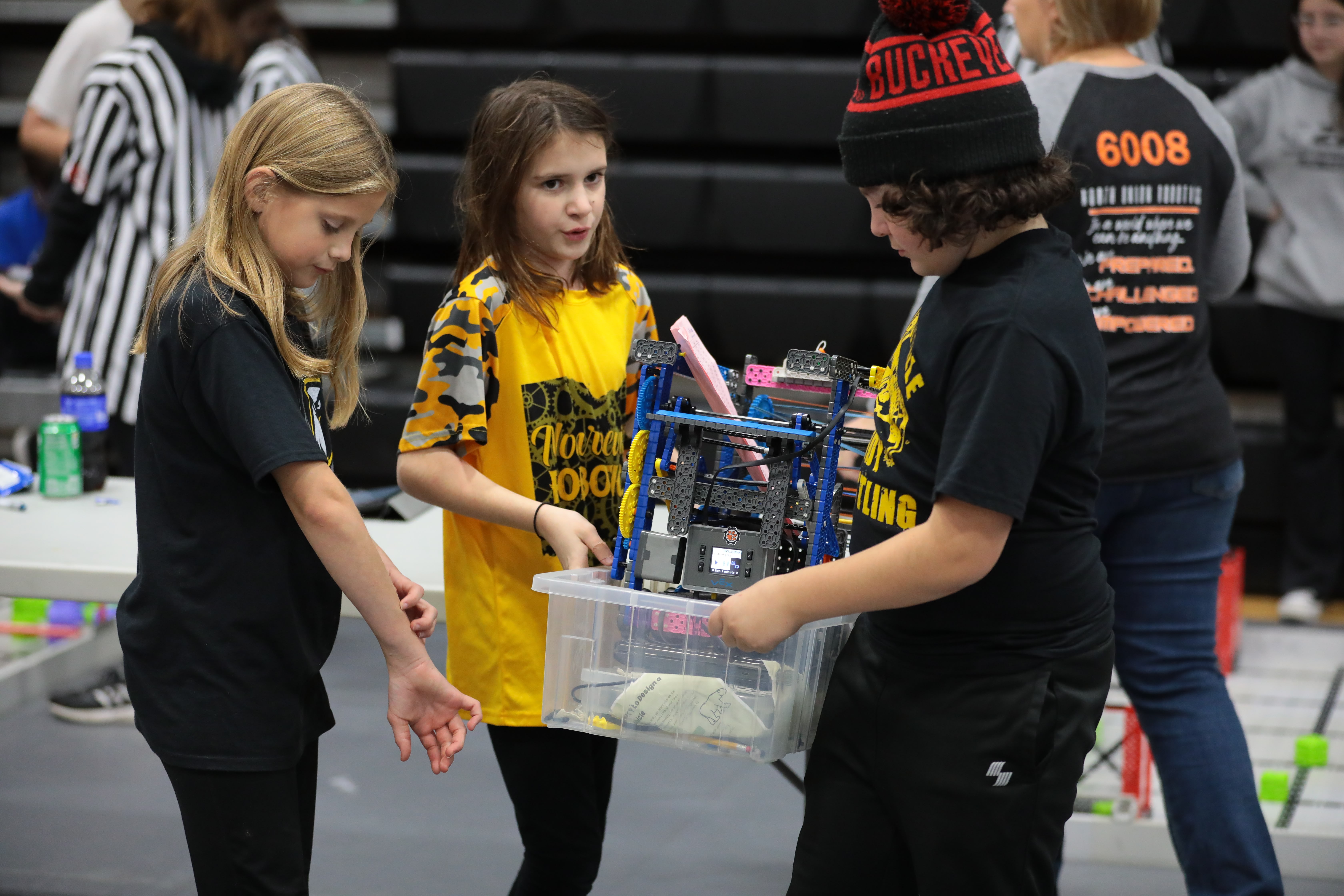
Your team's pit will be like your home base for the day. It will be labeled with your team number. This is your team's area to work on your robot and strategy between matches. This is also where judges will come to find you for interviews.
You will need to bring everything you need from your team's space with you to the competition. This includes things like:
- Your robot and controller.
- Extra batteries.
- Your VEX IQ Competition Kit, extra pieces, and Pin Tools.
- Your engineering notebook.
Preparing Your Pit
Now it is your turn to pack and prepare for the competition! In this activity you will look at what you are used to having in your team's space, and make a packing list of what you will need to bring to the event.
Use this task card (Google doc / .pdf / .docx) to help you get ready to set up your pit.
- Talk with your team and coach about everything you do in a regular team meeting, and what materials you use.
- Ask your coach about how you are getting to the event, and talk about how you will get your robot there safely.
Now it is your turn to pack and prepare for the competition! In this activity you will look at what you are used to having in your team's space, and make a packing list of what you will need to bring to the event.
Use this task card (Google doc / .pdf / .docx) to help you get ready to set up your pit.
- Talk with your team and coach about everything you do in a regular team meeting, and what materials you use.
- Ask your coach about how you are getting to the event, and talk about how you will get your robot there safely.
The packing list your team creates in this exploration is likely not going to have everything on it after the first try. You can ask the team questions as they are preparing to guide them to thinking about things they might need, without supplying the answers. For instance:
- How are we going to charge our Controller and Batteries? Will we bring them pre-charged, or do we need to charge them during the day?
- Do we have the boxes, carts, or materials we need to transport everything? Are there extra items we need to find, buy, or borrow?
- Who on the team will be responsible for making sure each item on the list is ready to go?
You and other team adults can help students to pack and transport items to and from the competition, but the students should be involved in what they are bringing, so they can use the materials effectively throughout the day.
Inspection
Inspection is a process in which volunteers check a robot against the rules and requirements in the game manual to make sure the robot is allowed to participate in matches. There will be an inspection area at the event that you will bring your robot to at the start of your day.
Robot inspection makes sure that all robots are following rules related to size, parts, and software. A robot must pass inspection in order to participate in matches.
This inspection checklist can help you make sure your robot will pass inspection. Print it out and check each item on the list as you prepare for your first event. You can also refer to the game manual to learn about inspection rules.
Practice Inspection
Next, your team will practice the inspection process to make sure that your robot will pass inspection at the competition.
Use this task card (Google doc / .pdf / .docx) to guide you through inspection.
- Make sure your robot meets the inspection criteria.
- Note any action items that you want to fix before the competition on your task card.
Next, your team will practice the inspection process to make sure that your robot will pass inspection at the competition.
Use this task card (Google doc / .pdf / .docx) to guide you through inspection.
- Make sure your robot meets the inspection criteria.
- Note any action items that you want to fix before the competition on your task card.
It is your team's responsibility to pass the inspection process at the competition. Your role is to ensure that the team and robot arrive safely on time, with enough time to be inspected before matches begin. Inspections can last 20 minutes or longer, so be sure to leave ample time for inspection when you are planning what time to arrive at the event.
- Note that not all members of the team need to physically be at inspection, but all team members are responsible for their robot meeting inspection criteria.
You can print out extra copies of the robot inspection checklist to make sure that everyone on the team is clear on what the inspection requirements are.
- If you have adult volunteers helping with this Session, have one of the adults act as the inspector, and check off/initial each checklist item.
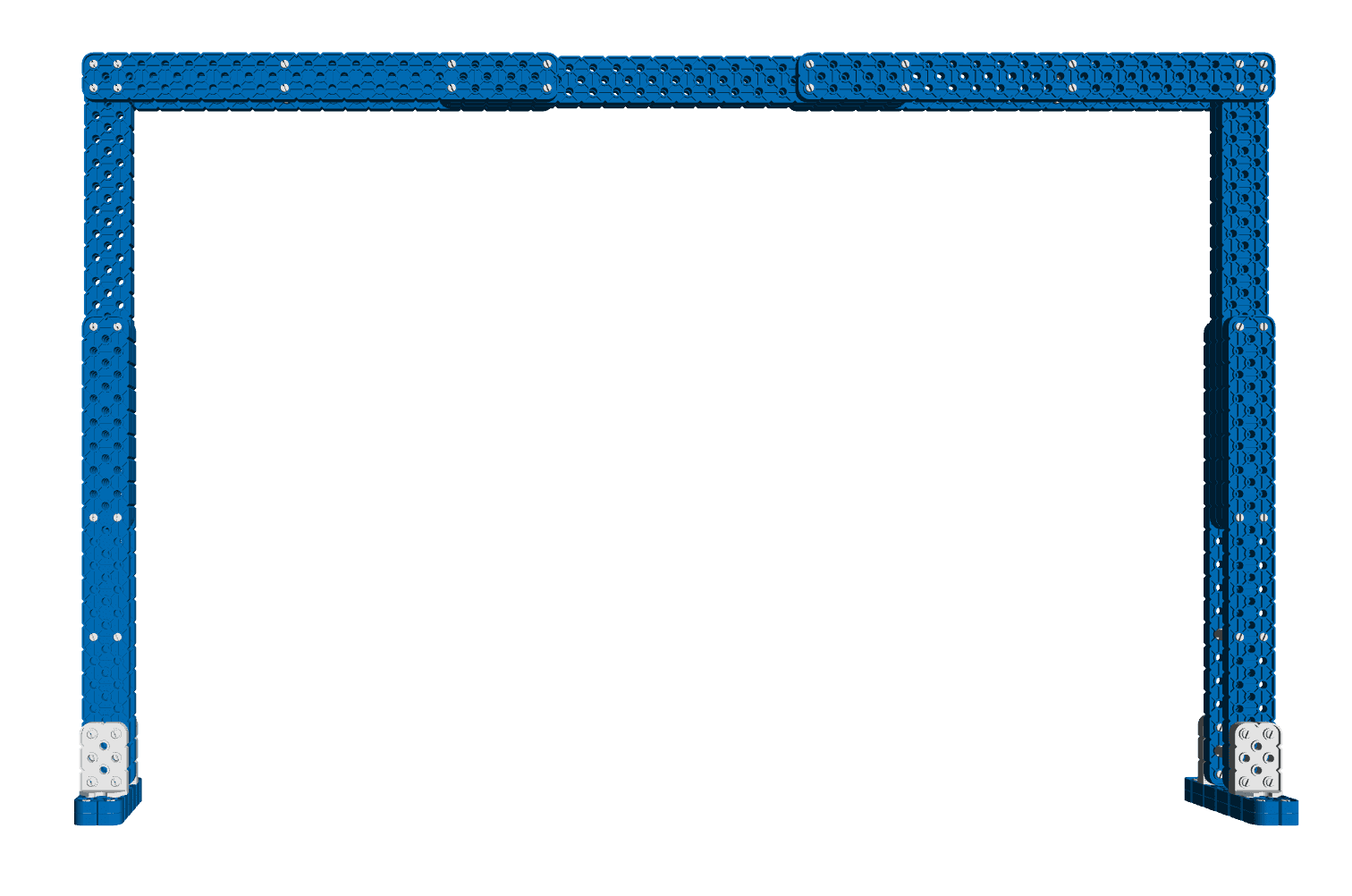
- Be sure to have a way of measuring the robot to ensure it fits within the size constraints. You can build the Competition Robot Sizing Tool (shown below) out of extra VEX IQ pieces, so students can practice using it to measure their robot.
Teamwork Challenge Matches
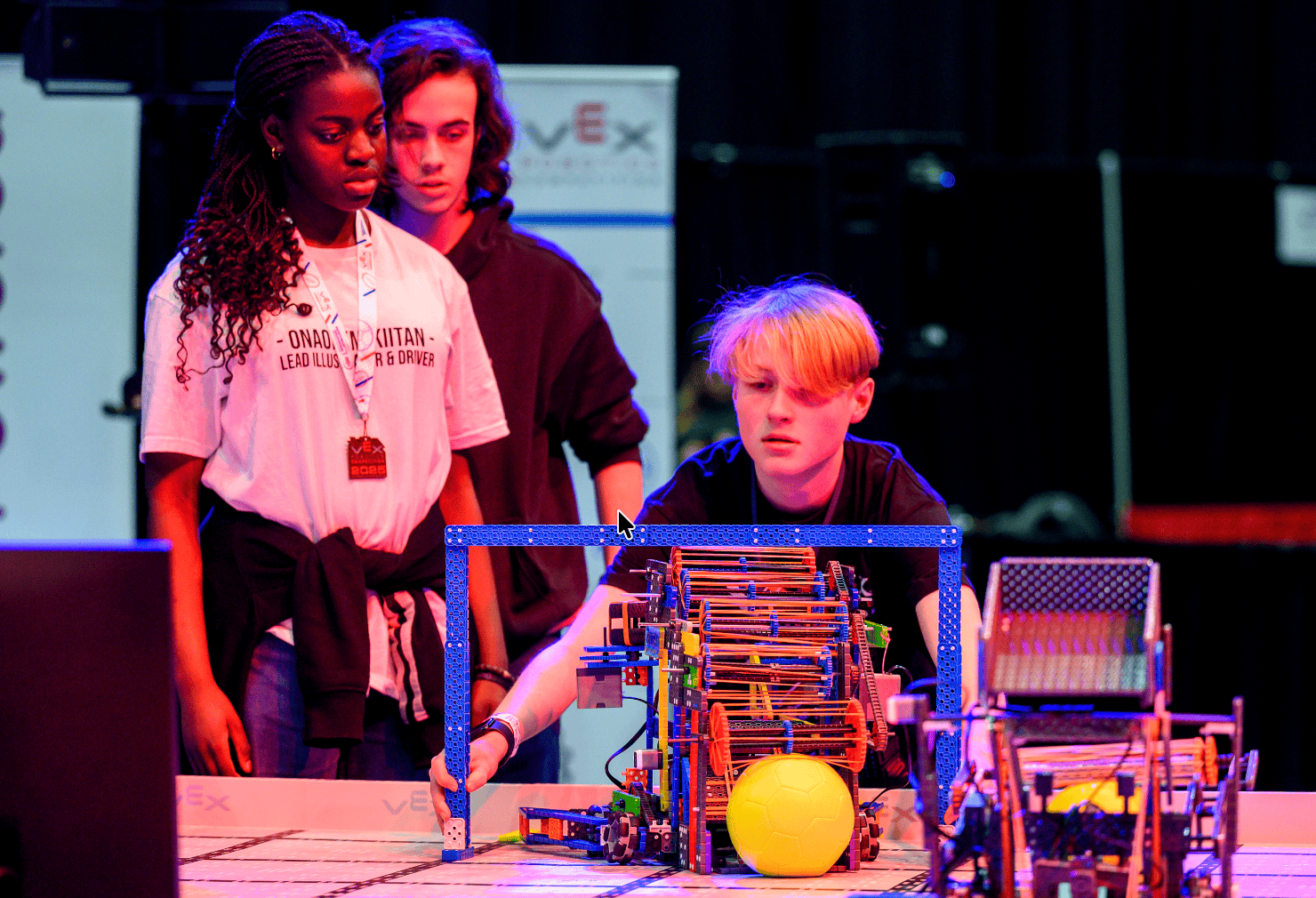
Your team will be paired with another team to make an alliance for each match that you play. Together, you will try to score as many points as you can in a 60 second match. Each team has two drivers, and the controller is handed off mid-match.
Your team will play several matches at the event. To begin, you will be randomly paired with another team as an alliance partner.
- The match schedule shows the time, location, and your alliance partner for matches.
- Find your alliance partner before the match to develop a game strategy.
- Keep track of the current match number being played, and arrive at the queuing area early with your alliance partner.
Practicing What to Do in a Match
Now that you've gone through inspection, it's time to get ready for a match! In this activity you will walk-through the things you need to do in competition match.
Use this task card (Google doc / .pdf / .docx) to guide you through your practice match.
- Make sure you are on time for your match based on the match schedule.
- Review the rules and scoring so you can be confident in checking your score with the referee.
- Remember, your coach cannot be with you at the Field during a match. Your team is responsible for match play and speaking up for yourselves after the match if there is a question about the rules or score.
Now that you've gone through inspection, it's time to get ready for a match! In this activity you will walk-through the things you need to do in competition match.
Use this task card (Google doc / .pdf / .docx) to guide you through your practice match.
- Make sure you are on time for your match based on the match schedule.
- Review the rules and scoring so you can be confident in checking your score with the referee.
- Remember, your coach cannot be with you at the Field during a match. Your team is responsible for match play and speaking up for yourselves after the match if there is a question about the rules or score.
The goal of this activity is for your team to practice what will happen when they get to an actual competition match. Remember, the coach cannot be with the team at the Field. The team is responsible for arriving ready to play and advocating for themselves if need be.
Have a sample match schedule for the team. You can use the one shown in the game manual for reference. Encourage the team to figure out how they will make sure they are on time for a match.
- If you have multiple drive teams, make sure the team has a way of knowing who will be driving in each match.
Practice confirming a score. If time allows, you can have the team actually play a practice match to score it. If not, just have the Field set up as though they have played, so they can practice scoring a match for themselves. Have a volunteer act as the referee and show the team a score to confirm.
Role play interactions if you think your team would benefit from communication skills practice.
- To practice respectfully advocating for themselves, show them an inaccurate score to role play how to respond and appeal a referee's ruling or score.
- To practice strategy discussions with another team, have students or volunteers act as alliance partners to role play how to develop a collaborative strategy for a match.
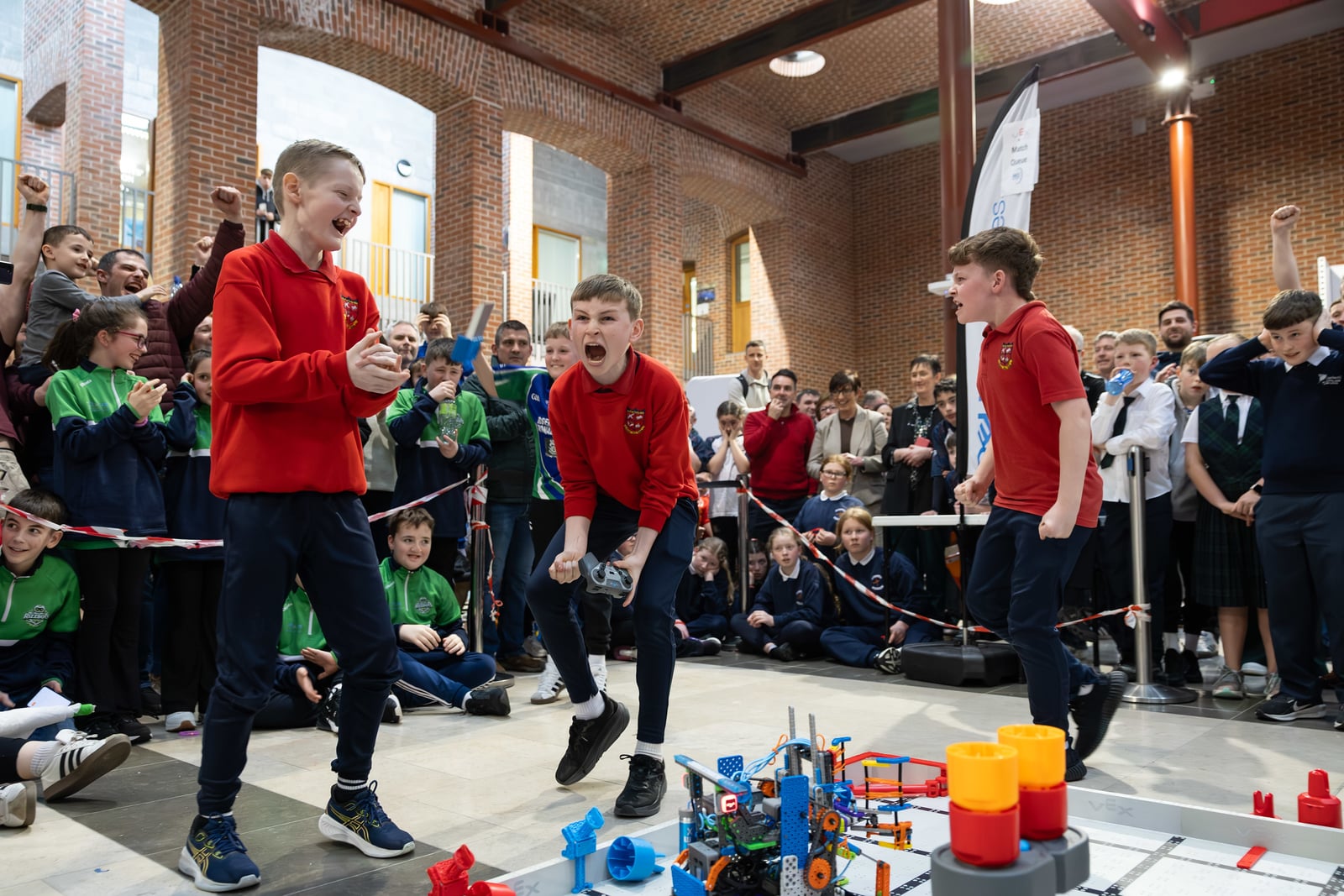
You can invite parents to come and cheer at the Field, announce what is happening during match play, or use the actual tournament sound effects for things like the start of the match, if you think your team would benefit from being exposed to some of the sensory stimuli of a VEX IQ Robotics Competition event ahead of time.
Engineering Notebook Judging and Interviews
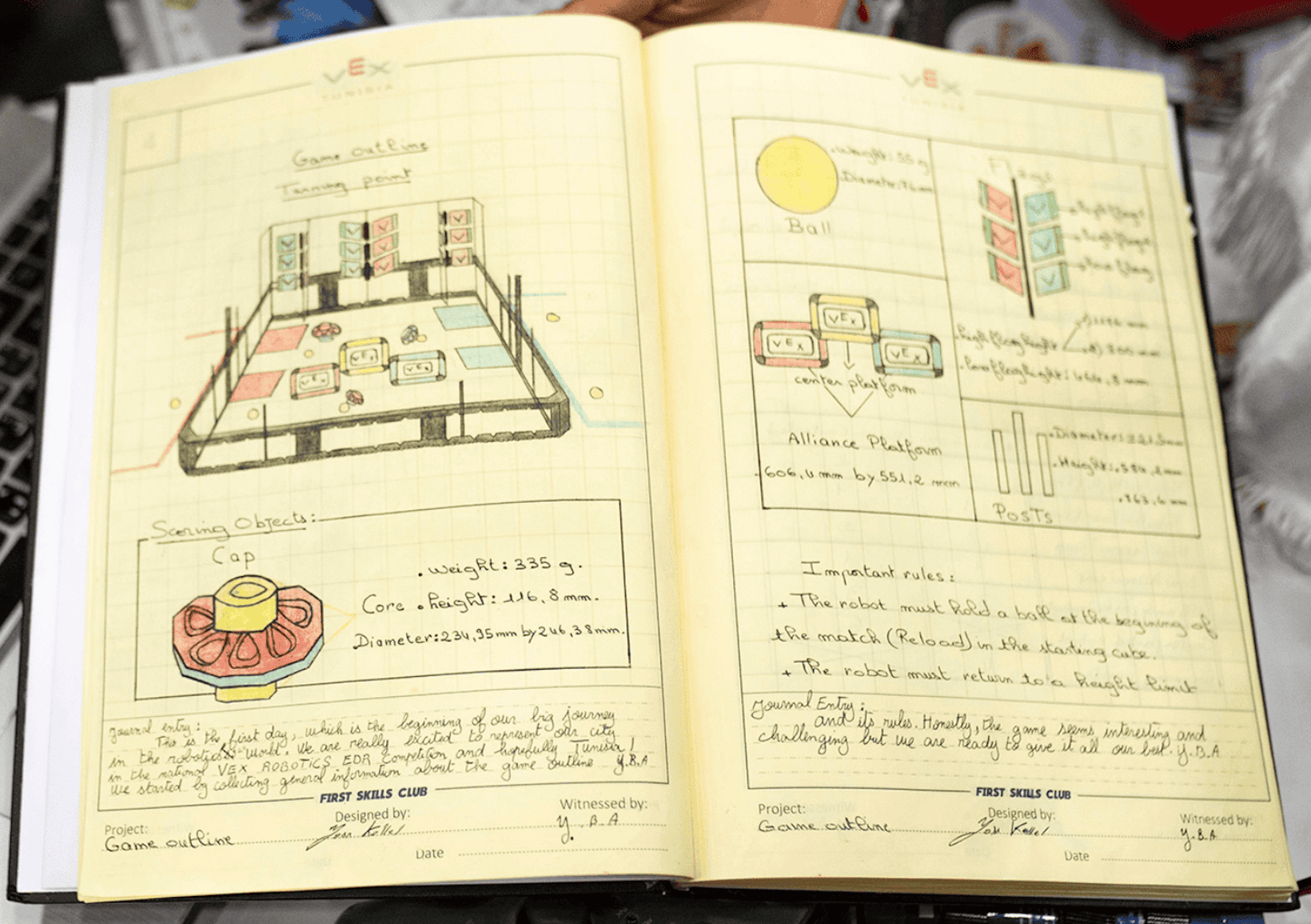
Your team uses your engineering notebook to document all of the work you've done to design, build, and improve your robot. The team's engineering notebook and summaries will be turned in when your coach checks in at the event, so that it can be judged. Your team may also be interviewed by the judges during the event.
Engineering Notebook
Throughout this STEM Lab, you have been documenting your data and progress in your engineering notebook. You've also practiced using the Student-Friendly Engineering Notebook rubric to help get your notebook ready for judging at the VEX IQ Robotics Competition. Now you will take one more look at your notebook to be sure it is ready to go.
Team Interviews
Interviews are one way that volunteer Judges get information about teams to determine winners of some awards at the event. An interview includes two or more judges, and is about a 5-10 minute conversation.
Judges interview teams in their pits.
Preparing Your Notebook for Judging
Now it's time to make sure that your engineering notebook is ready for judging. In this activity, you will judge your own notebook, using the Student-Friendly Engineering Notebook Rubric, and make notes about what you want to change in your notebook moving forward.
Use this task card (Google doc / .pdf / .docx) to guide you through the activity.
- Make sure that all team members are clear on what is in the engineering notebook.
- Your notebook doesn't have to be perfect for your first competition. It will continue to grow and get better throughout the season. This activity will help you prepare for this competition, and think more about your notebook for the next one.
Now it's time to make sure that your engineering notebook is ready for judging. In this activity, you will judge your own notebook, using the Student-Friendly Engineering Notebook Rubric, and make notes about what you want to change in your notebook moving forward.
Use this task card (Google doc / .pdf / .docx) to guide you through the activity.
- Make sure that all team members are clear on what is in the engineering notebook.
- Your notebook doesn't have to be perfect for your first competition. It will continue to grow and get better throughout the season. This activity will help you prepare for this competition, and think more about your notebook for the next one.
In this exploration, students will check their engineering notebook in its entirety against the Student-Friendly Engineering Notebook rubric, and make any needed updates to their summaries, so their notebook is ready to turn in. Remind students that they have been using the rubric to check their documentation throughout this STEM Lab and that this is not the time to make major revisions.
Note: The Student-Friendly Engineering Notebook Rubric is designed to help students easily understand how to create their notebook in the best possible way. The judges at events, however, will use this Engineering Notebook Rubric to evaluate all notebooks.
Students should not go back and redo any previous notebook entries to make them “better”. They can apply what they learn from this exploration to their notebooking practices moving forward, so that their notebook continues to improve throughout the season.
If you think your students would benefit from practicing their interview skills, have an adult volunteer act as a judge and role play an interview with the team. This can help students practice how they will articulate their learning over the course of the season. Share this Student-Friendly Interview Rubric with students before the role-play and discuss it in the same way you have done throughout the Lab with the Student-Friendly Engineering Notebook Rubric.
Select Next Session > to move on to the next session.