
Engage
Launch the Engage Section
ACTS is what the teacher will do and ASKS is how the teacher will facilitate.
| ACTS | ASKS |
|---|---|
|
|
Facilitate the Build
-
InstructInstruct
students to join their groups and have them complete the Robotics Roles & Routines sheet. Use the Suggested Role Responsibilities slide in the Lab 1 Image Slideshow as a guide for students to complete this sheet.
Instruct students that the competition Hero Robot is build in two stages. First, they will build the Competition Base 2.0, then they will add onto that to build the Competition Advanced 2.0 Hero Robot.
-
DistributeDistribute
build instructions for the Competition Base 2.0 to each team. Journalists should gather the materials on the checklist for the Competition Base 2.0 to begin.
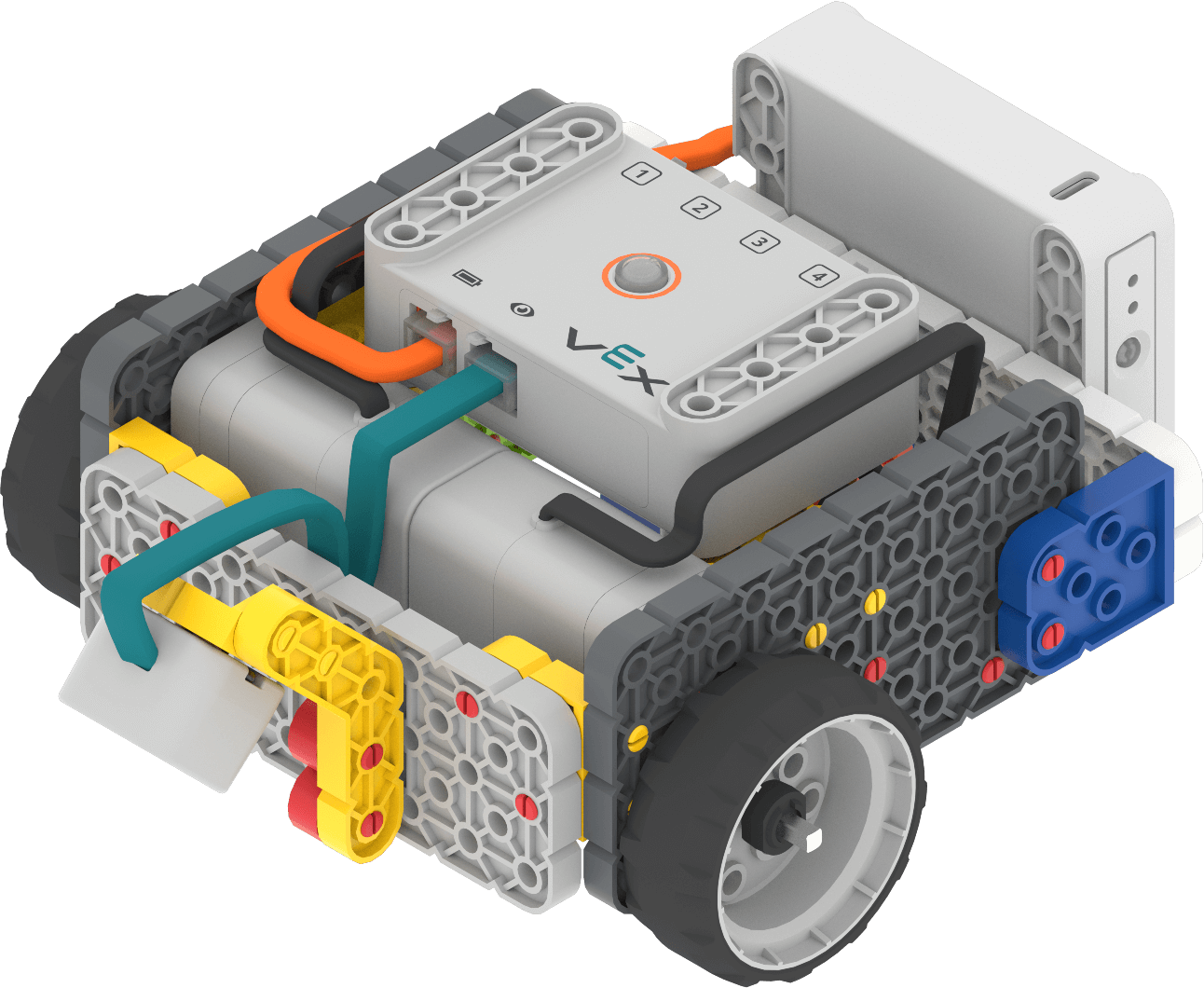
Competition Base 2.0 As students complete the Competition Base 2.0, have them check in with you. Then, distribute the build instructions for the Competition Advanced 2.0 Hero Robot. Students will add onto the Competition Base to build the Competition Advanced 2.0 Hero Robot. Journalists should gather the materials on the checklist.
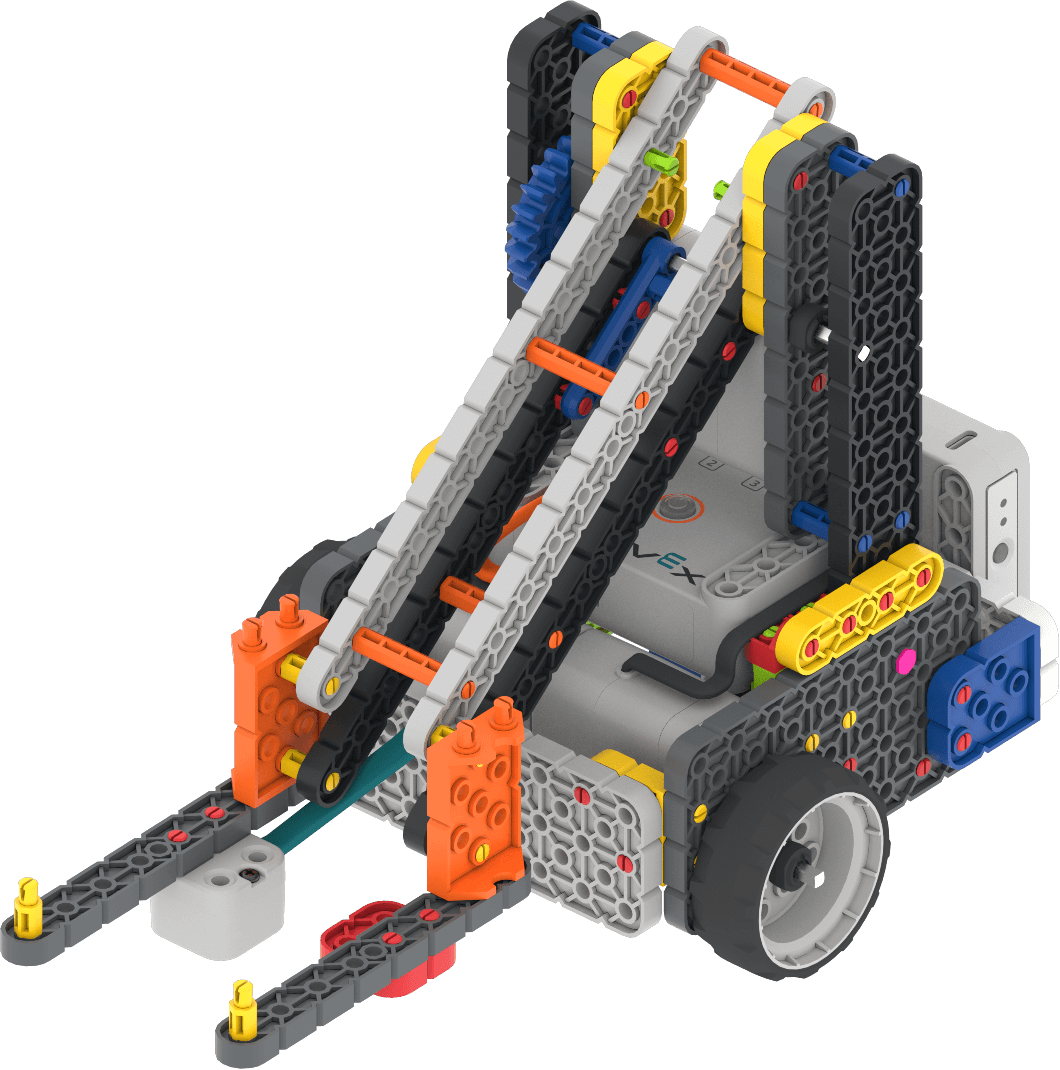
Competition Advanced 2.0 Hero Robot -
FacilitateFacilitate
the building process.
- Builders and Journalists should begin building based on their responsibilities in the Lab 1 Image Slideshow.
- Depending on the amount of time you have, you may want to have students build the Competition Base 2.0, then stop, and resume building during the next class time.
- Circulate around the room to help students with building or reading instructions where needed. Remind students that they can orient pieces they are holding and building with the same way they are shown in the build instructions, in order to help them be successful in their build.
- Engage students' prior knowledge by asking questions about how this build is similar or different to other VEX GO builds that they have used before, like the Code Base. Why do they think that is? What might the competition robot be able to do that is new or different?
- OfferOffer positive reinforcement for teams that are working well together, taking turns, and using respectful language as they are building. If there are particular teams or students that excel at building, offer them the opportunity to help teams that may by struggling with the build.

Teacher Troubleshooting
- Students can test that their Competition Base 2.0 is build correctly before moving on to the Competition Advanced portion of the build. Have them power on the Brain, connect to VEXcode GO and open the Drive tab. Use the joysticks to move the robot forward or backward. If the robot is build correctly, it should drive successfully when it is connect to VEXcode GO.
- Remind students that forward/reverse is based on the location and position of the robot. If the Competition Advanced 2.0 Hero Robot is backwards on the field with the fork facing the student, moving the controls forward will drive the robot towards the student, not towards the Field.
- If the robot does not respond, try disconnecting and reconnecting the Brain and try again. This may happen if too much time passes between turns driving the robot.
Facilitation Strategies
- Introduce the Village Engineering Construction Competition to your students using the Village Engineering Construction PDF Storybook! The book gives a diary account of Col. Jo as part of the Village Engineering Construction team, and contextualizes competition tasks for students through Col. Jo's experiences in a fun and engaging story.
- Read the story to students, print a copy for your classroom library, and return to the story throughout your competition cycle.
- You may want to have students create their own Construction Logs to track their progress through competition tasks alongside Col. Jo.
- Allow extra time in the Engage section if you choose to have students build Stage 1 of the Village Engineering Field together with you. To help students stay organized, divide the build instructions by team. Suggestions for how to do this include:
- Team A and B each build a large trailer following the Large Trailer build instructions
- Team C completes the Shipping Container build instructions
- Team D completes the Brown Walls build instructions
- Team E completes the Gray Walls build instructions
- Team F completes the Roof build instructions
- Team G and H complete the field tiles and walls construction
- Allow time during Play Part 1 for all students to take a turn driving the Hero Robot on the Field. Remind students that they can change the controls to find a drive mode that works best for them.
- Tank Drive: Each joystick controls the spin of a different motor
- Left Arcade: One joystick that is on the left-hand side of the screen that controls both motors
- Right Arcade: One joystick that is on the right-hand side of the screen that controls both motors
- Split Arcade: Two joysticks; one controls left and right movements, and the other controls forward and reverse movements
- The speed of the Hero Robot depends on how slow or quickly the controls are moved in the Drive tab. The slower the joystick is pushed, the slower the robot will move. For more information about remote control driving in VEXcode GO, read the Using the Drive Tab in VEXcode GO article.
- Think ahead about how you want to structure the Village Construction competition. It is recommended for each team to have at least two matches to compete in, so that as many students as possible get to have the chance to be a drive in the competition. To learn more about running VEX GO classroom competitions, see this article.
- Encourage students to document their learning by drawing or writing about their robot, driving practice, and competition strategy. Use the Blueprint Worksheet (Google Doc/.docx /.pdf) or the Data Collection Sheet (Google Doc/.docx /.pdf) as a basic template for students to take notes. These artifacts can then be used to share student learning and progress with others in the classroom and school community on a bulletin board or student portfolio.