
Now that you have practiced using pitch and yaw to move and turn the VEX AIR Drone, you are ready to learn a new type of movement—roll. In this lesson, you will use the VEX AIR Flight Simulator and explore how roll allows the drone to move side to side along the x-axis, while still keeping the drone’s nose pointed forward.
Watch this video to learn more about:
- How to use the right joystick to roll left and right.
- The difference between rolling side-to-side and yawing (turning) to change direction.
- Considering the orientation of the drone when navigating.
Hover & Discover
Roll is the control that moves the drone left and right without turning its nose. A drone rolls when the propellers on one side spin faster than the propellers on the opposite side. This speed difference tilts the drone to the side, causing it to slide left or right along the x-axis.
When the propellers on the right side spin faster, that side lifts and tilts the drone to the left, causing it to slide left across the field.
When the propellers on the left side spin faster, that side lifts and tilts the drone to the right, causing it to slide right across the field.
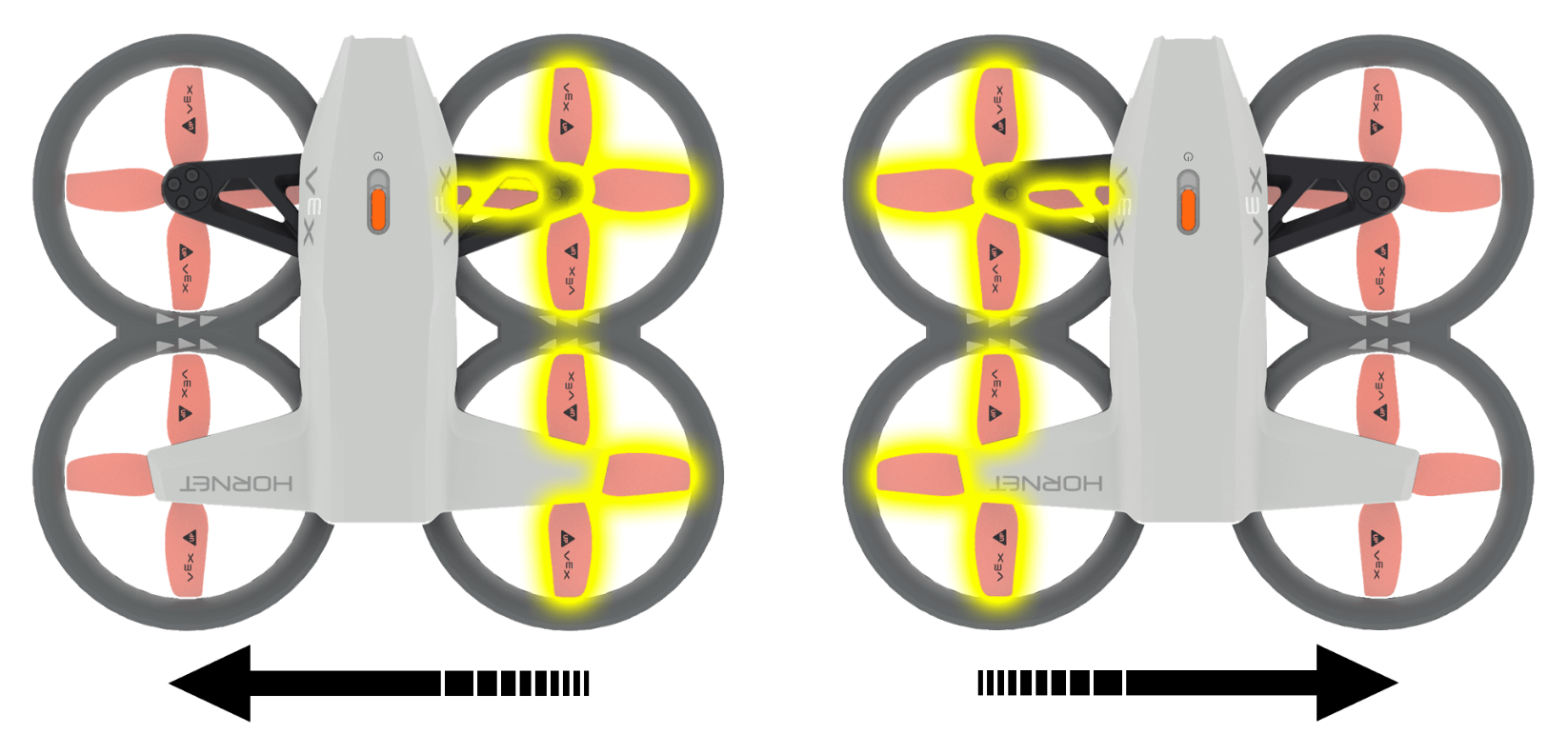
Because the nose stays pointed forward during roll, you can move sideways without changing the orientation of the drone. This differs from yaw, which rotates the drone to face a new direction. Understanding the difference between rolling and yawing helps pilots decide when to move sideways and when to turn before flying.
Mission: Roll Flight
In this mission, you will use roll to move the drone sideways across the field while keeping the nose pointed forward. Follow these steps to complete your mission:
- Connect your controller to VEXcode AIR and select the Simulator tab. Refer to this article about using the VEX AIR Flight Simulator for more detailed instructions.
- Fly the drone to take off, then roll left to fly through the first blue ring. Return to the takeoff location, then roll right to fly through the second blue ring as shown in this video:
- Use this Mission Log to document your flight (Google Doc / .docx / .pdf).
Practice this mission multiple times! Rolling may feel different than other movements at first, but focusing on gradual improvement will help you build confidence.
- Once you have practiced the mission and logged your practice flights in your Mission Log, complete the Roll Flight mission in Flight School.
- Read the VEX Library article Using Flight School in the VEX AIR Flight Simulator for instructions on how to access and use Flight School.
- Find badge criteria for the mission in the Mission Log.
- When you have completed your Flight School mission, add your name to your badge.
- Save your badge, and share it with your instructor as directed.
Real-World Connections
Drone pilots often need to move sideways while keeping the camera or sensors pointed in a specific direction. Because roll keeps the drone’s orientation steady, it is especially useful for tasks where the pilot must maintain a consistent forward-facing view.
For example:
- Building and infrastructure inspections – Pilots roll to align with windows, beams, or cracks without turning the drone away from the structure.
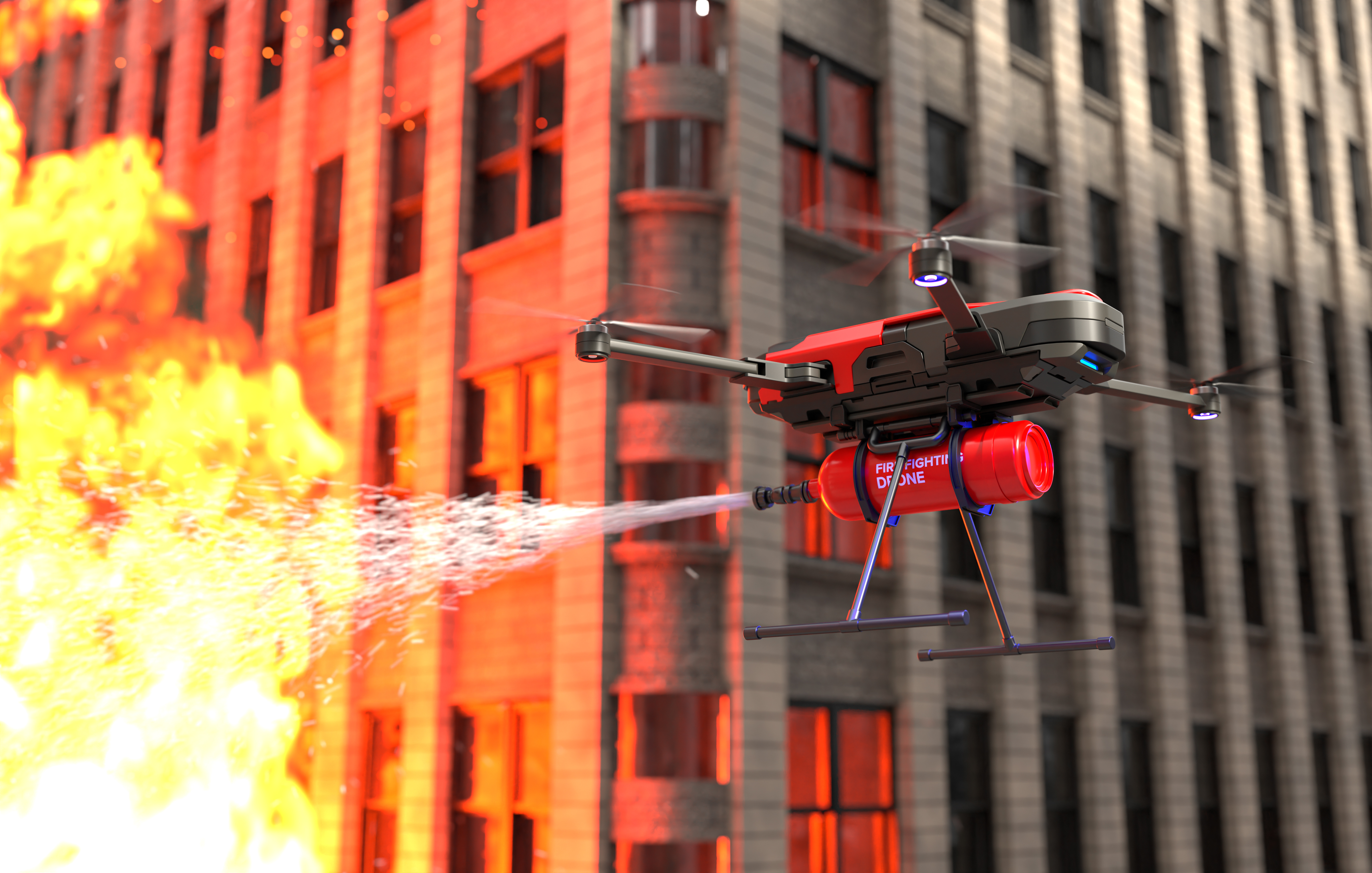
- Safety operations – In grid searches or patrols, pilots roll to scan an area systematically while staying oriented in the same direction. In the photo below, a professional drone operator flies an outdoor firefighting drone. Because of the orientation of the fire extinguisher, the pilot must roll the drone to put out the fire efficiently.
- Sports and event coverage – Camera operators can follow players down the field while rolling to adjust their shot without changing the drone’s orientation.
Check Your Understanding
Before moving on, ensure that you understand the concepts in this lesson by answering the questions here (Google Doc / .docx / .pdf).
Select Next > to move on to the following lesson.