
One Stick Controller를 사용하여 VEX AIM 코딩 로봇을 움직이고, 공을 차고, 통을 놓는 방법을 배웠습니다. 이제 모든 것을 조립할 차례입니다! 이 단원 챌린지에서는 컨트롤러 기술을 사용하여 정확하고 전략적으로 계획을 세워 일련의 작업을 완료하게 됩니다. 그룹과 협력하여 접근 방식을 계획하고, 동작을 연습하고, 기술을 다듬어 가능한 한 효율적으로 도전을 완료하세요!
이 제한 시간 챌린지에서는 가능한 가장 짧은 시간 안에 다음 작업을 완료해야 합니다.
- AprilTag ID 0과 1로 만들어진 골에 스포츠 공 2개를 넣으세요.
- AprilTag ID 2 옆에 주황색 통 3개를 놓으세요.
- 4월태그 ID 3 옆에 파란색 통 3개를 놓으세요.
로봇이 도전 과제를 완료하는 예를 보려면 아래 영상을 시청하세요.
이제 영상을 시청하셨으니, 생각을 일기에 적어보세요.
- 챌린지 과제를 최대한 빨리 완료하려면 무엇에 대해 생각해야 할까요?
- 지금까지의 과정을 통해 배운 내용 중 이 과제를 완료하기 위한 최선의 전략을 세우는 데 도움이 될 만한 것은 무엇인가요?
- 이 챌린지를 완료하는 데 대해 궁금한 점이 있나요?
- 귀하의 전략이 효과적일 것이라고 생각하는 이유는 무엇입니까? 단원 전체에서 배운 내용을 바탕으로 추론하여 자신의 아이디어를 뒷받침하세요.
이제 영상을 시청하셨으니, 생각을 일기에 적어보세요.
- 챌린지 과제를 최대한 빨리 완료하려면 무엇에 대해 생각해야 할까요?
- 지금까지의 과정을 통해 배운 내용 중 이 과제를 완료하기 위한 최선의 전략을 세우는 데 도움이 될 만한 것은 무엇인가요?
- 이 챌린지를 완료하는 데 대해 궁금한 점이 있나요?
- 귀하의 전략이 효과적일 것이라고 생각하는 이유는 무엇입니까? 단원 전체에서 배운 내용을 바탕으로 추론하여 자신의 아이디어를 뒷받침하세요.
모든 학생이 과제를 시작하기 전에 과제의 목표를 이해하고, 과제를 완료하기 위한 증거 기반 전략을 수립하고 있는지 확인하세요. 학생들이 영상을 본 후, 제공된 학생용 프롬프트를 사용하여 과제에 대한 그룹 토론을 시작하세요.
학생들에게 영상에서 본 내용 외에도 이전 수업에서 기록한 일기를 참고하여 초기 생각을 정리하고 질문에 답할 수 있다는 점을 상기시켜 주세요.
도전을 완료하세요
이제 로봇을 조종하여 도전 과제를 완료하는 한 가지 방법을 살펴보았으니, 직접 시도해 볼 시간입니다!
1단계: 아래와 같이 필드를 설정합니다.
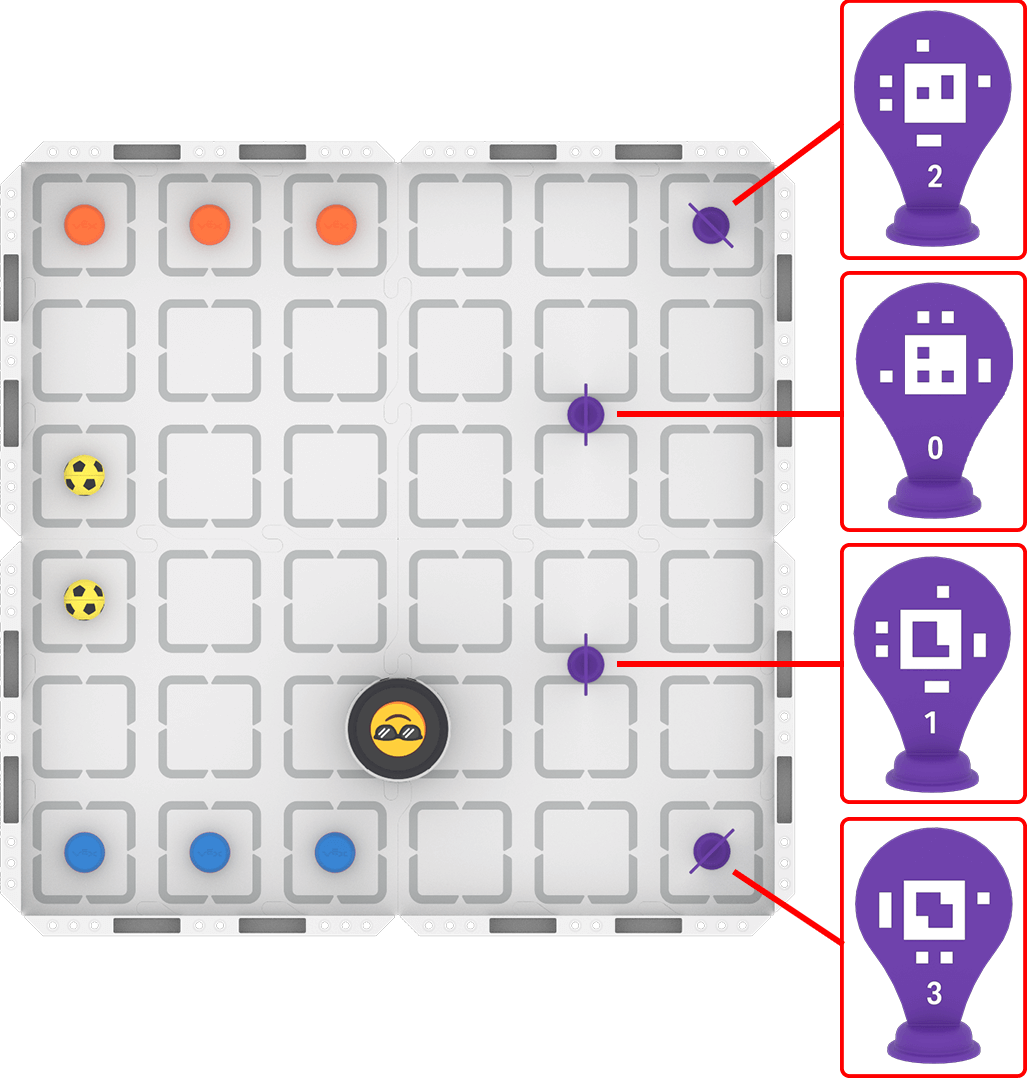
2단계: 시간 제한 챌린지를 시작합니다.
여러분의 과제는 로봇이 다음의 모든 동작을 가장 짧은 시간 안에 수행하도록 하는 것입니다.
- 스포츠 공 2개를 골 안으로 차 넣으세요.
- 모든 오렌지색 통을 AprilTag ID 2로 옮깁니다.
- 모든 파란색 통을 AprilTag ID 3으로 이동합니다.
이 작업 카드(Google / .docx / .pdf)를 사용하여 과제를 완료하는 데 도움을 받으세요. 계속해서 기록을 개선하기 위해 노력하세요!
이제 로봇을 조종하여 도전 과제를 완료하는 한 가지 방법을 살펴보았으니, 직접 시도해 볼 시간입니다!
1단계: 아래와 같이 필드를 설정합니다.
2단계: 시간 제한 챌린지를 시작합니다.
여러분의 과제는 로봇이 다음의 모든 동작을 가장 짧은 시간 안에 수행하도록 하는 것입니다.
- 스포츠 공 2개를 골 안으로 차 넣으세요.
- 모든 오렌지색 통을 AprilTag ID 2로 옮깁니다.
- 모든 파란색 통을 AprilTag ID 3으로 이동합니다.
이 작업 카드(Google / .docx / .pdf)를 사용하여 과제를 완료하는 데 도움을 받으세요. 계속해서 기록을 개선하기 위해 노력하세요!
시작 시 도전에 대한 기대를 전면에 내세우세요.
- 턴테이킹과 협업 전략을 검토하세요.
- 학생들과 함께 도전 과제 동안 서로를 지원할 수 있는 방법에 대해 브레인스토밍하세요.
학생들에게 과제 카드 (Google / .docx / .pdf)을 나눠주어 단원 과제를 완료할 수 있도록 안내합니다. 각 그룹이 달리는 시간을 정할 수 있는 방법을 마련하세요.
방을 돌아다니면서 각 그룹이 어떻게 과제를 완수하고 있는지 확인하세요.. 다음과 같은 질문을 해보세요.
- 도전을 완료하기 위한 전략은 무엇인가요?
- 전략을 더 효과적으로 만들기 위해 바꿀 수 있는 한 가지 사항은 무엇입니까? 그것이 제대로 작동하는지 어떻게 알 수 있나요?
- 도전과제를 완수하기 위해 노력하면서 어떤 어려움에 직면하고 있나요? 어려움에 직면했을 때 앞으로 나아가는 가장 좋은 방법을 어떻게 평가하시나요?
- 귀하의 그룹은 이 과제를 완수하기 위해 어떻게 협력하고 있나요?
학생들에게 반복적으로 작업할 수 있는 충분한 시간을 제공하세요. 학생들은 도전에 참여하고, 일기에 시간을 기록하고, 시간을 단축하기 위한 전략을 결정해야 합니다. 유닛 챌린지에서는 '완료'라는 것이 없습니다! 그런 다음 변경 사항의 효과를 확인하기 위해 다시 도전에 참여해야 합니다.
단위 챌린지에서는 챌린지를 종료하고 학생들이 학습 내용을 공유하도록 전환할 시점을 결정할 수 있습니다. 모든 학생이 도전 과제를 효과적이고 반복적으로 완료할 시간을 가졌다고 생각되면 도전 과제 단계를 마무리하고 반성 단계로 넘어가세요.
전략을 공유하세요
모든 사람이 도전과제를 완료하면, 여러분의 전략을 학급 전체에 공유하게 됩니다. 이 공유 세션을 준비하려면 저널에 다음 질문에 답하세요.
- 여러분의 그룹은 어떤 전략을 사용하여 도전을 완료했나요? 왜 성공했나요?
- 여러분의 그룹은 어떻게 그 전략을 함께 선택했나요?
- 과제를 완수하기 위해 단원에서 배운 내용을 어떻게 적용했나요? 답변은 구체적으로 해주세요.
- 귀하의 전략이 도전을 완료하는 데 가장 좋은 방법이라고 생각하시나요? 왜 그럴까? 아니면 왜 그렇지 않을까?
모든 사람이 도전과제를 완료하면, 여러분의 전략을 학급 전체에 공유하게 됩니다. 이 공유 세션을 준비하려면 저널에 다음 질문에 답하세요.
- 여러분의 그룹은 어떤 전략을 사용하여 도전을 완료했나요? 왜 성공했나요?
- 여러분의 그룹은 어떻게 그 전략을 함께 선택했나요?
- 과제를 완수하기 위해 단원에서 배운 내용을 어떻게 적용했나요? 답변은 구체적으로 해주세요.
- 귀하의 전략이 도전을 완료하는 데 가장 좋은 방법이라고 생각하시나요? 왜 그럴까? 아니면 왜 그렇지 않을까?
모든 학생이 도전과제를 완료하면 전체 학급이 모여 전략을 공유하고 토론하는 시간을 갖습니다. 이는 문제를 해결하는 다양한 방법을 강조하고, 학생들이 과학적 논의에 참여하여 주장을 하고 증거를 제시하여 주장을 옹호할 수 있는 기회입니다. 이 섹션의 목표는 학생들에게 자신의 성공을 공유하고 다양한 전략과 접근 방식에 대한 토론에 참여할 수 있는 기회를 제공하는 것입니다.
토론은 마지막 질문을 중심으로 진행되어야 합니다. 귀하의 전략이 과제를 완수하는 데 가장 좋은 방법이라고 생각하십니까? 왜 그럴까? 아니면 왜 그렇지 않을까? 토론이 끝날 무렵에는 학생들이 가장 좋은 접근 방식이 무엇인지에 대한 의견 일치를 보게 될 것입니다.
- 한 그룹이 자신의 전략을 공유하거나 수업에서 프로젝트를 시연하고 질문에 대한 답을 발표하는 것으로 시작합니다.
- 각 그룹은 공유된 내용에 대해 프로젝트 전략과 저널 문서를 증거로 사용하여 주장을 뒷받침해야 합니다.
- 학생들에게 이 과제에서 "최고"가 무엇을 의미하는지 더 깊이 생각해 보도록 독려하세요. 여기서는 어떤 기준을 사용할 수 있을까? 왜?
학생들에게 존중하는 태도로 토론해야 한다는 교실의 기대 사항을 상기시키고, 판단이 아닌 증거를 바탕으로 동의하거나 반대하도록 독려합니다.
반성하고 공유하세요
이 단원을 시작할 때, 여러분은 교사와 함께 학습 목표를 공동으로 만들었습니다. 이제 도전과제를 완료했으니, 학습 목표를 향한 진행 상황을 되돌아볼 시간을 가지세요.
각 학습 목표에 대해 저널에 다음 문장을 완성하세요:
- 이 단원을 시작하기 전에 저는 _________________라고 생각했습니다.
- 단원 챌린지를 완료한 후, 나는 _________________을 깨달았습니다.
- 이에 대한 나의 증거는 ______________________입니다.
각 학습 목표에 대한 문장을 완성하면 선생님과 확인하세요. 이러한 성찰은 여러분이 배운 내용을 공유하는 데 도움이 될 것입니다.
이 단원을 시작할 때, 여러분은 교사와 함께 학습 목표를 공동으로 만들었습니다. 이제 도전과제를 완료했으니, 학습 목표를 향한 진행 상황을 되돌아볼 시간을 가지세요.
각 학습 목표에 대해 저널에 다음 문장을 완성하세요:
- 이 단원을 시작하기 전에 저는 _________________라고 생각했습니다.
- 단원 챌린지를 완료한 후, 나는 _________________을 깨달았습니다.
- 이에 대한 나의 증거는 ______________________입니다.
각 학습 목표에 대한 문장을 완성하면 선생님과 확인하세요. 이러한 성찰은 여러분이 배운 내용을 공유하는 데 도움이 될 것입니다.
Reflect and Share 의 목적은 학생들에게 다음을 안내하는 것입니다.
- 저널에 있는 증거를 활용하여 각 학습 목표에 대한 진행 상황을 평가합니다.
- 학급 전체가 단원 이해를 중심으로 사고를 수렴하도록 지도합니다.
- 학습한 내용을 실제 적용과 연관시킵니다.
효과적인 형성평가 구현에 대한 정보는 VEX PD+ 비디오 라이브러리에서 이 비디오를 하세요.
먼저, 학생들은 각 학습 목표에 대한 진행 상황을 돌아보기 위해 문장을 완성합니다.
다음으로, 학생들이 저널에 기록한 평가를 공유하도록 하여 전체 학급 토론에 참여시키세요. 다음과 같은 프롬프트를 사용하여 학생들이 각 단원의 이해에 대한 공통된 결론을 도출하도록 안내합니다.
- 저는 ________________에 대한 몇 가지 아이디어/전략을 듣고 있습니다. 이러한 설명 중 어느 것이 가장 좋은지 어떻게 결정할 수 있을까?
- 어떻게 증거를 사용하여 당신의 생각이 옳다는 것을 다른 사람을 설득할 수 있을까요?
- 증거를 활용해 당신의 전략이 더 낫다는 것을 누군가에게 어떻게 확신시킬 수 있을까요?
- 공유된 아이디어의 가장 좋은 부분을 결합하고 증거로 뒷받침하는 설명을 제안할 수 있는 분이 있나요?
- 당신의 설명/아이디어가 가장 정확하다는 것을 어떻게 확신할 수 있나요?
- 귀하의 아이디어를 뒷받침할 수 있는 실제 사례를 생각해 볼 수 있나요?
학생들의 사고가 단원 이해에 집중되도록 이끌었다면, 학생들이 단원 전체에서 참고할 수 있도록 학급 전체의 공통 이해를 보여주는 수업 자료를 만들 수도 있습니다. 이 문서에 대한 아이디어는 다음과 같습니다.
- 앵커 차트
- 개념 지도
- 디지털 학습 보드
마지막으로, 학생들은 단원 시작 부분에서 브레인스토밍한 실제 세계의 사례와 학습 내용을 연관시켜야 합니다. 다음과 같은 질문을 통해 토론을 진행하세요.
- 여러분이 배운 내용이 해양 연구, 식품 배달, 농장 유지 관리에 로봇을 사용하는 사람에게 어떻게 유용할 수 있을까요? (단원 소개에서 다룬 실제 세계와의 연관성을 바탕으로 질문을 맞춤화하세요.)
이 단원의 섹션을 진행하는 방법에 대해 자세히 알아보려면 VEX 라이브러리 기사하세요.
모든 단원으로 돌아가려면 단원으로 돌아가기 > 선택하세요.