
What are Industrial Robots?
Industrial robots are robotic arms that can move in several directions and can be programmed to carry out many different types of tasks in different environments. These industrial robots can work:
- In varying environments like high-pressure and vacuum chambers.
- In clean workrooms and in terribly dirty areas.
- In dangerous areas where threats of explosions, infections, radiation, or other extreme hazards are present and dangerous to humans.
Robotic arms can be equipped with specialized grippers to work with delicate and fragile objects, while other robotic arms can have grippers that can grasp and lift loads weighing several tons.
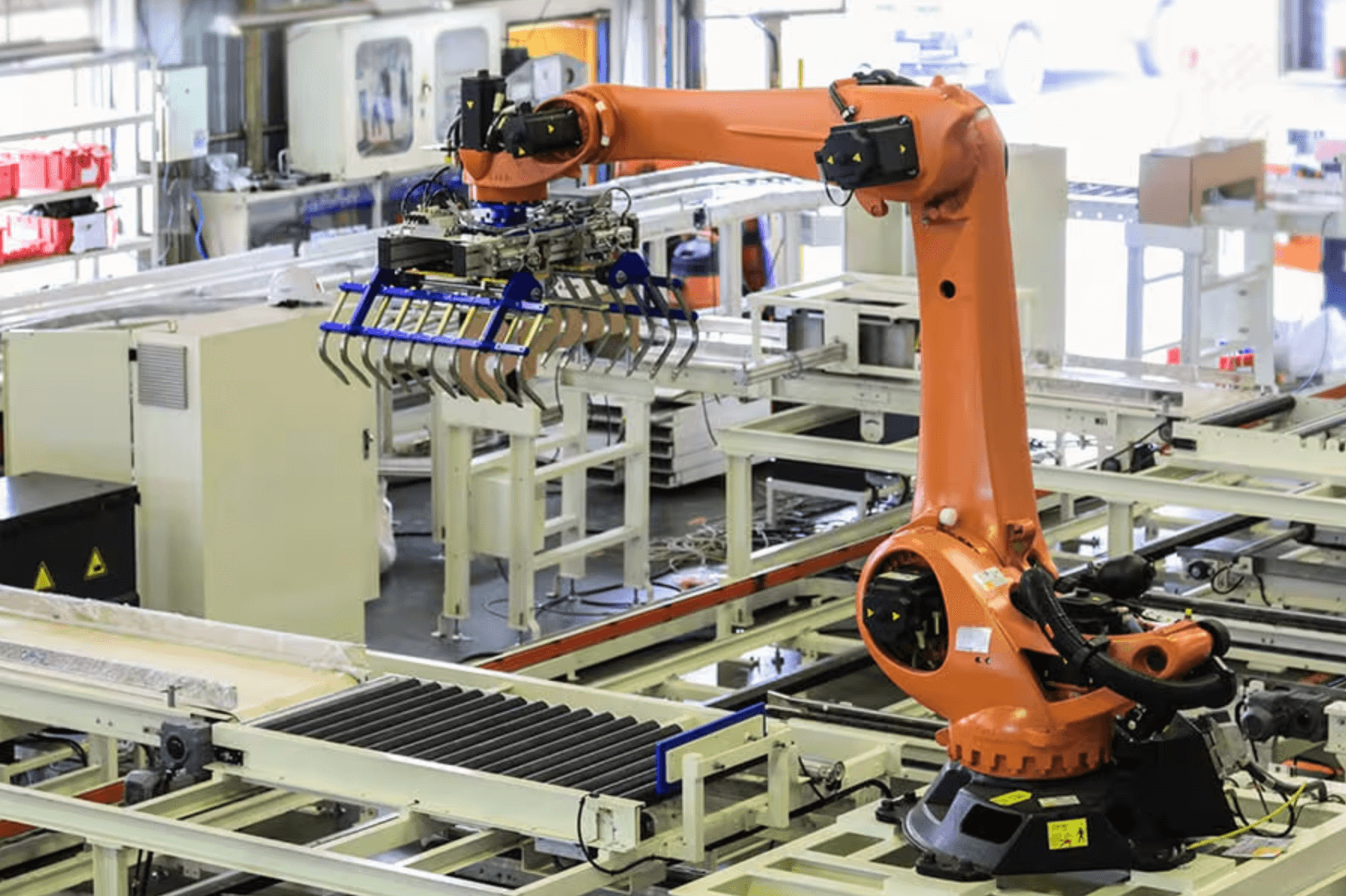
Robotic arms can be equipped with any type of tool. These tools are used with precision, accuracy, speed, and repetitiveness that can not be matched by humans.
These robotic arms can have a multitude of sensors and vision systems capable of viewing images to aid with their computer-based control. That sensor and vision feedback can be used with artificial intelligence to make decisions about the behavior of the robotic arm.
Industrial robots and automation are an important part of the manufacturing of most products produced in today’s world.
Teach Pendant
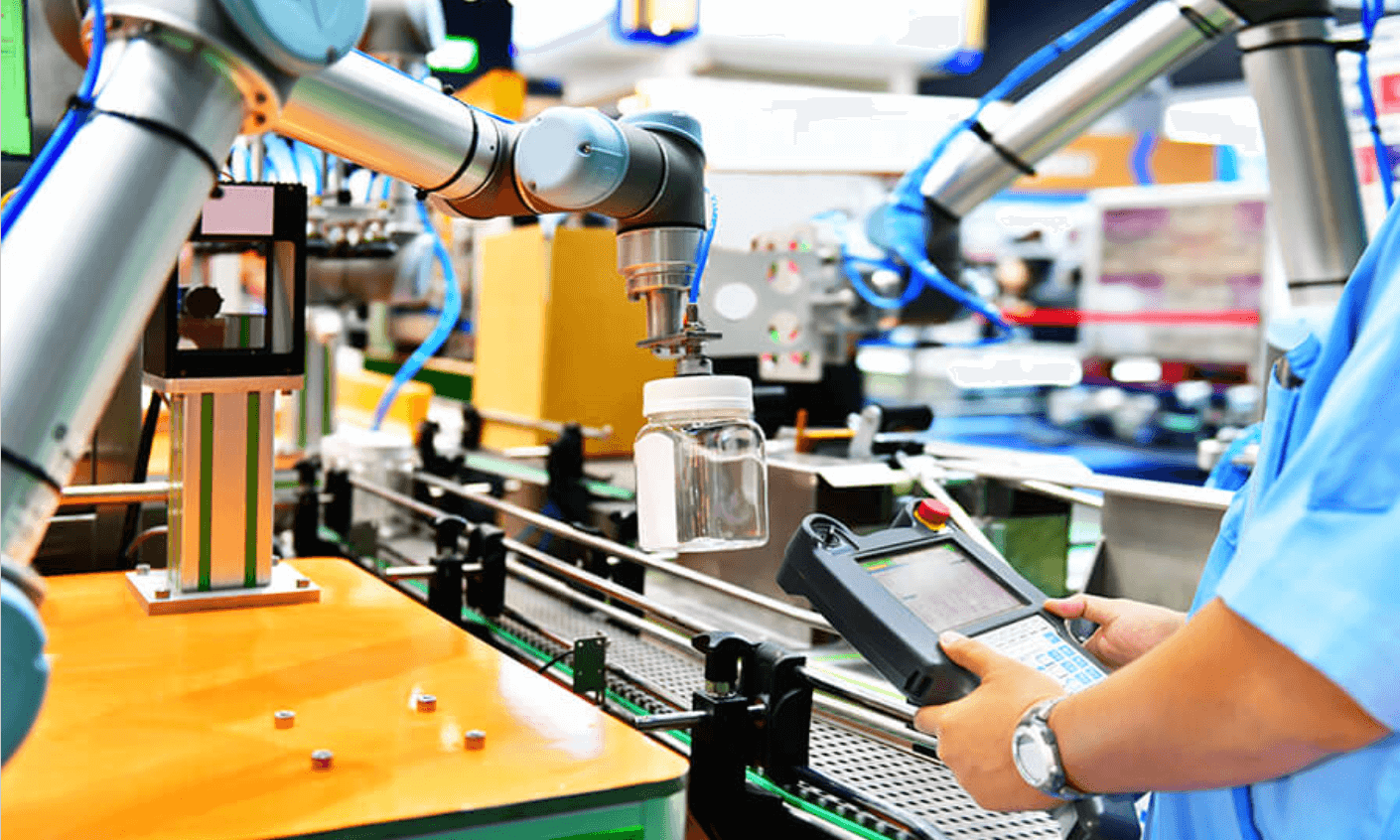
A teach pendant is an interface device used to program and operate industrial robotic arms. It allows the operator to input precise movements and control the robot's actions for tasks like assembly or material handling. This handheld device is essential for instructing the robot on the specific sequences and operations it needs to perform, increasing productivity and ensuring consistency in production lines. Furthermore, with safety as a priority in industrial settings, teach pendants often include emergency or controlled stop buttons and other safety features to allow immediate shutdown of robotic operations if needed.
Industrial Robots and Safety in the Workplace
Industrial robots are a very important part of most types of manufacturing today. As robots are becoming more common in the workplace, it is essential to have safety standards to protect workers from injuries and accidents. These potentially dangerous pieces of equipment have many hazards which need to be safeguarded against. One hazard is pinch points. A pinch point occurs whenever one or more parts are moving and come in contact with another part. Pinch points on industrial robots can trap and harm workers.
Safety Mechanisms
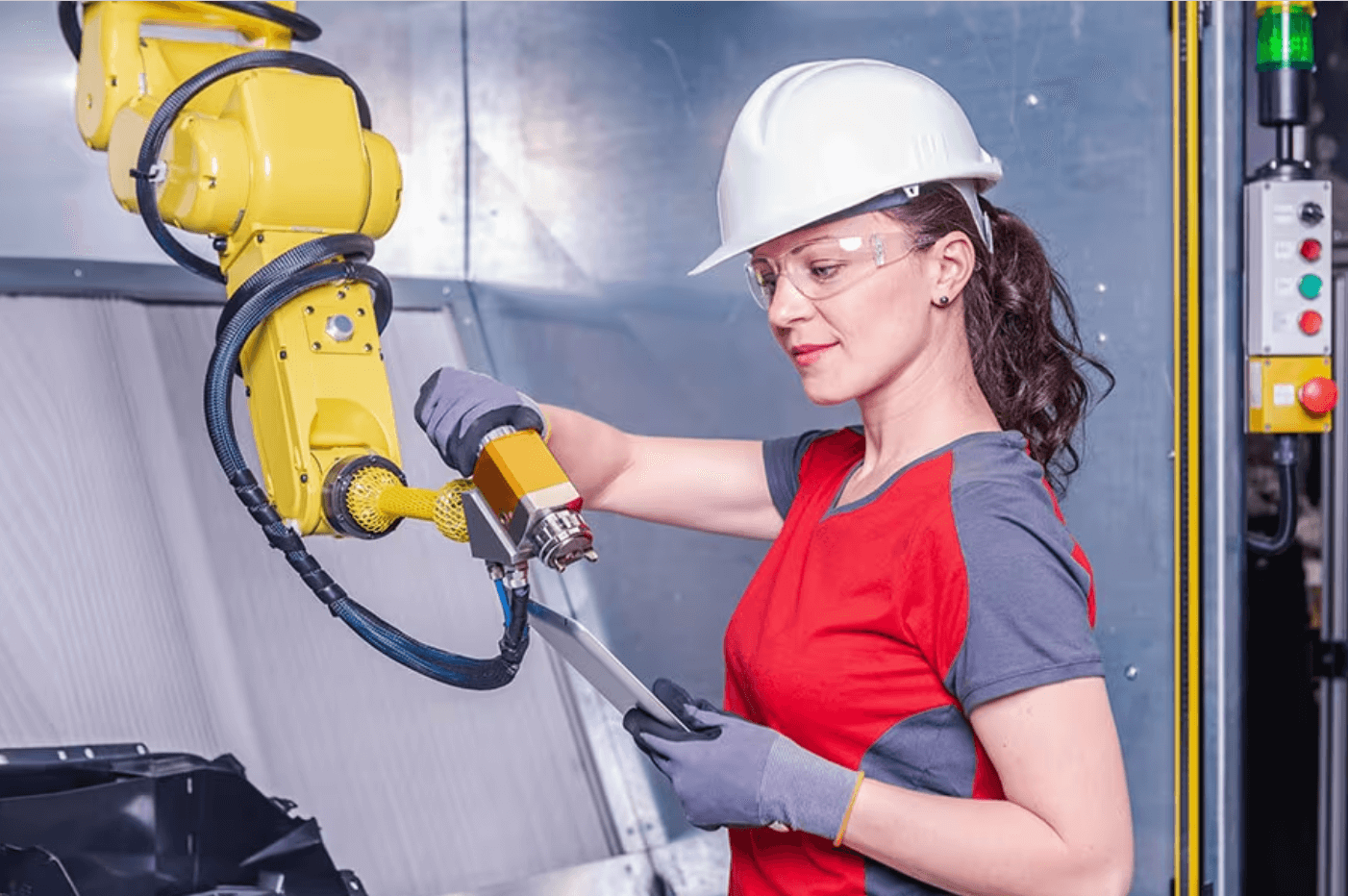
In today’s world, there are three laws of robotics that illustrate the importance of keeping workers safe while working around industrial robots. These laws outline that robots should not hurt humans and that they should follow specific orders in order to maintain their functionality.
Safety mechanisms are designed to stop or slow down a piece of equipment.
Emergency stops, also known as E-stops, are designed to allow a worker to shut down a piece of equipment, such as a robot. This action will immediately halt all operations of the equipment by cutting power. A controlled stop functions similar to an emergency stop and shuts down equipment, including halting the movement of a robotic arm. This is a more controlled movement as the robot will complete its current action or follow a predefined deceleration path to avoid damage to the product and the machine when completing a controlled stop.
Similar to the emergency stop is the Dead Man switch. This is a switch that needs to be held down by a person while they are programming a robot using some teach pendants. While the switch is held down, the robot will move in a slow programming mode. If the switch is released during this programming mode, the robot’s motors will stop. This allows a worker to safely be within a robot’s workspace while programming the robot.
Other safety mechanisms function automatically and are designed to keep workers out of the workspace the equipment is working within. Light curtains will shut down a piece of equipment if an object blocks the light beams. For instance, if a worker left a tool besides a robotic arm and reached in to get it while the arm was running, the light curtain would shut down the arm, keeping the worker from accidentally being crushed. Collision detectors on the equipment also stop accidents. If a worker’s metal lunch box accidentally fell into the workspace of a robotic arm, the arm’s collision detection sensor would detect a foreign object, and stop the arm from moving before anything would be damaged.
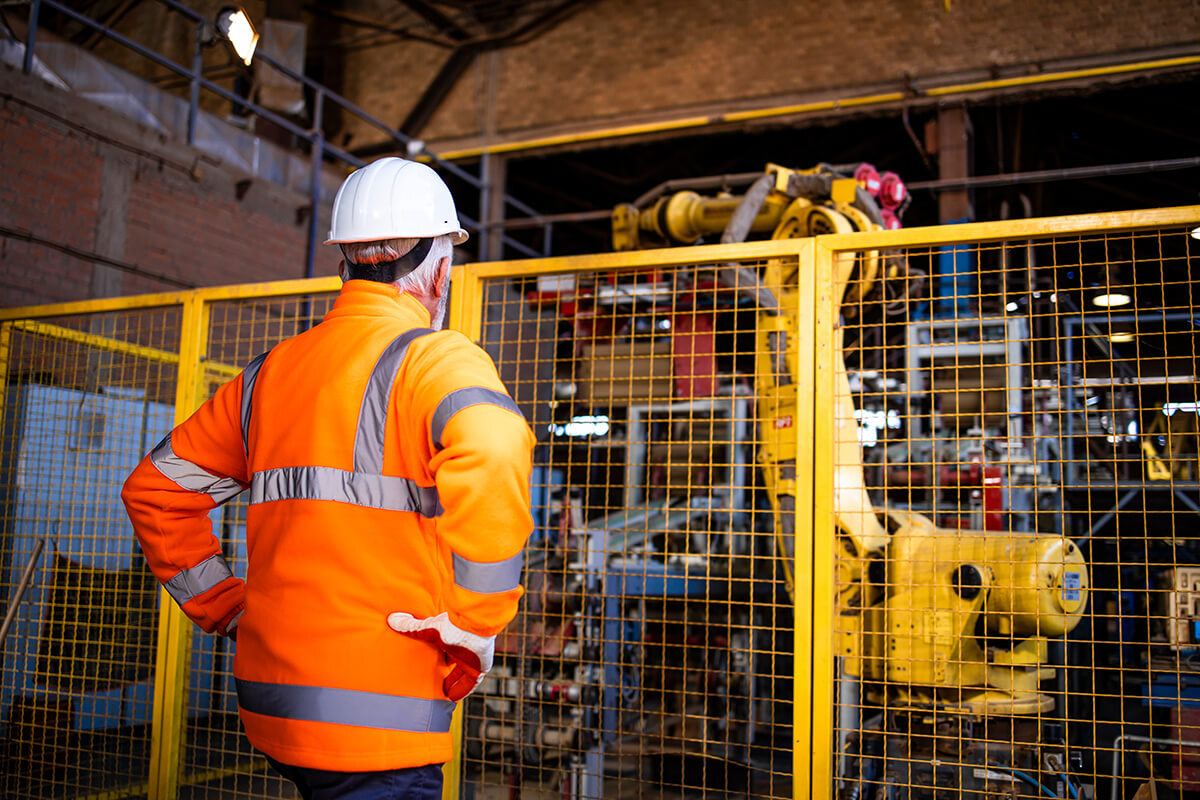
Additional safety mechanisms are designed to stop equipment before a worker enters its workspace. Pressure mats can be placed all around a robotic arm. If a worker steps on the mat, sensors in the mat will detect the person and stop the arm from moving. Many pieces of industrial equipment have barriers such as a chain-linked fence around them. If the barrier has a gate, it might contain an interlocked barrier guard. This is an example of a sensor that would automatically turn off the equipment if the gate to the barrier is opened.
Choose an Activity
Choose one of the activities from the choice board below to deepen your understanding of the real-world application of industrial robotics.
|
Robotics Career Fair Design a presentation for a career fair focusing on professions in the field of industrial robotics. This should include different career paths (e.g., robotics engineer, technician, safety inspector), the education and skills required for each, and potential career prospects. Use multimedia elements like slides, videos, or interactive components to make the presentation engaging and informative for students who might be interested in pursuing a career in this field. |
Industrial Robot Design Challenge Design a new type of industrial robot that addresses a specific need in manufacturing, such as working in extreme conditions or handling delicate materials. Create a detailed, labeled drawing of your robot, highlighting its unique features and capabilities. Explain how your robot improves upon existing designs and how it could be used in real-world manufacturing settings. |
Robotics Safety Expert As a safety expert, analyze the potential hazards associated with industrial robots and devise a comprehensive safety plan. This plan should include both safety mechanisms (like emergency stops or light curtains). Create a poster or presentation that outlines these safety measures and educates workers about how to safely interact with industrial robots. |
|
Robotics in Society Infographic Create an infographic that illustrates how industrial robots impact society, including both positive and negative effects. Your infographic should cover areas like manufacturing efficiency, job creation and loss, safety improvements, and potential future developments in robotics. Use statistics, quotes, and visuals to make your points clear and engaging. |
Teach Pendant Pamphlet Create an informative and persuasive pamphlet that explains the importance and advantages of using a teach pendant in industrial robotics. Your pamphlet should target an audience of manufacturing industry professionals, highlighting how a teach pendant enhances efficiency, precision, and safety in robot operation. |
Robot Safety Public Service Announcement (PSA) Video Create a short PSA video highlighting the importance of safety around industrial robots. Focus on potential hazards like pinch points, the necessity of emergency stops and other safety mechanisms. Demonstrate safety procedures using the 6-Axis Robotic Arm. |
Select < Return to Units to go back to the Unit Overview.